
You want bedding that is soft, keeps you cool, and helps you sleep well. Many people compare lyocell vs cotton, as well as bamboo sheets, for these reasons. Check out the table below—softness and moisture-wicking are key factors that make people buy again and pay more.
Attribute | Effect on Repeat Purchase | Price Premium Consumers Accept |
|---|---|---|
Softness | +25% | 15–20% |
Moisture Wicking | +30% | 20–30% |
If you care about the planet, you’re not alone. About 82% of buyers say eco-friendly choices matter when picking bedding. Choosing bedding made with closed-loop production and biodegradable materials helps the earth. It lowers your carbon footprint and supports the environment. Think about how your bedding affects nature and your comfort. When considering lyocell vs cotton sheets, bamboo, and other green options, you can improve your sleep and help the planet.
Key Takeaways
Bamboo lyocell gives you the coolest sleep. It is great for hot places. Lyocell bedding feels smooth and is good for the Earth. It is comfy and gentle on nature. Cotton sheets are liked because they are soft. But cotton can hold heat and sweat. Bamboo and lyocell sheets both dry fast. This helps you stay comfy all night. Picking bamboo or lyocell bedding helps the planet. They use less water and energy than cotton.
Quick Comfort Comparison
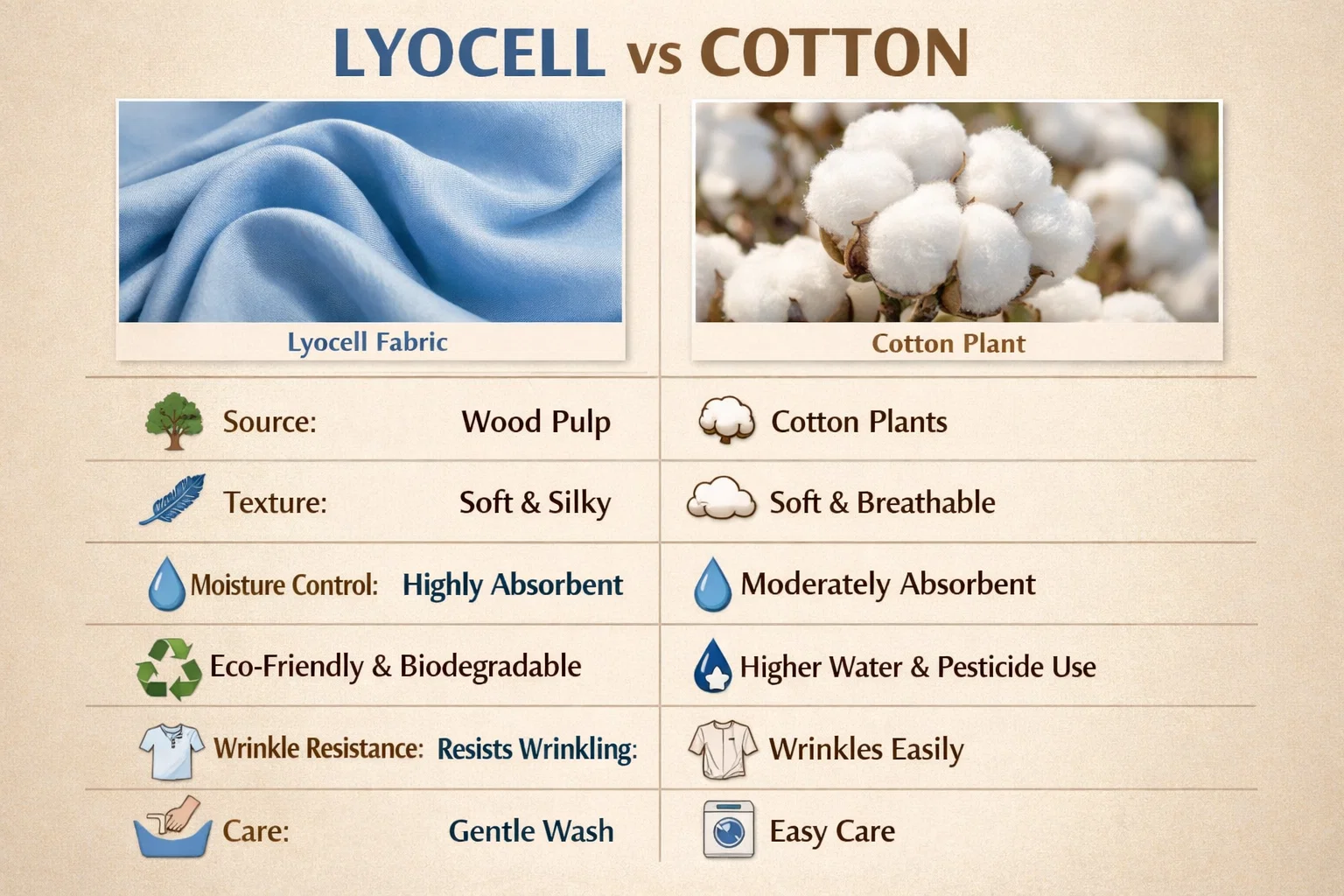
Comfort Factors Table
You want bedding that feels nice every night. Let’s see how lyocell, cotton, and bamboo compare for comfort and being eco-friendly. The table below shows how each one does:
Factor | Lyocell | Cotton (300 TC Sateen) | Bamboo Lyocell |
|---|---|---|---|
Softness | Silky, smooth | Crisp, soft | Ultra-soft, silky |
High | Moderate | Very high | |
Moisture Wicking | Excellent | Good | Outstanding |
Temp Regulation | Cool, balanced | Warm | Coolest |
Skin Sensitivity | Gentle | May irritate some | Hypoallergenic |
Shrinkage After Wash | 2.5% | 3.8% | 2.1% |
Eco-Friendliness | Sustainable, closed-loop | Varies (organic best) | Highly sustainable |
Bamboo lyocell and lyocell both feel silky and cool. Cotton feels crisp and soft but can get warm at night. Bamboo lyocell is great at keeping moisture away and stays soft after many washes.
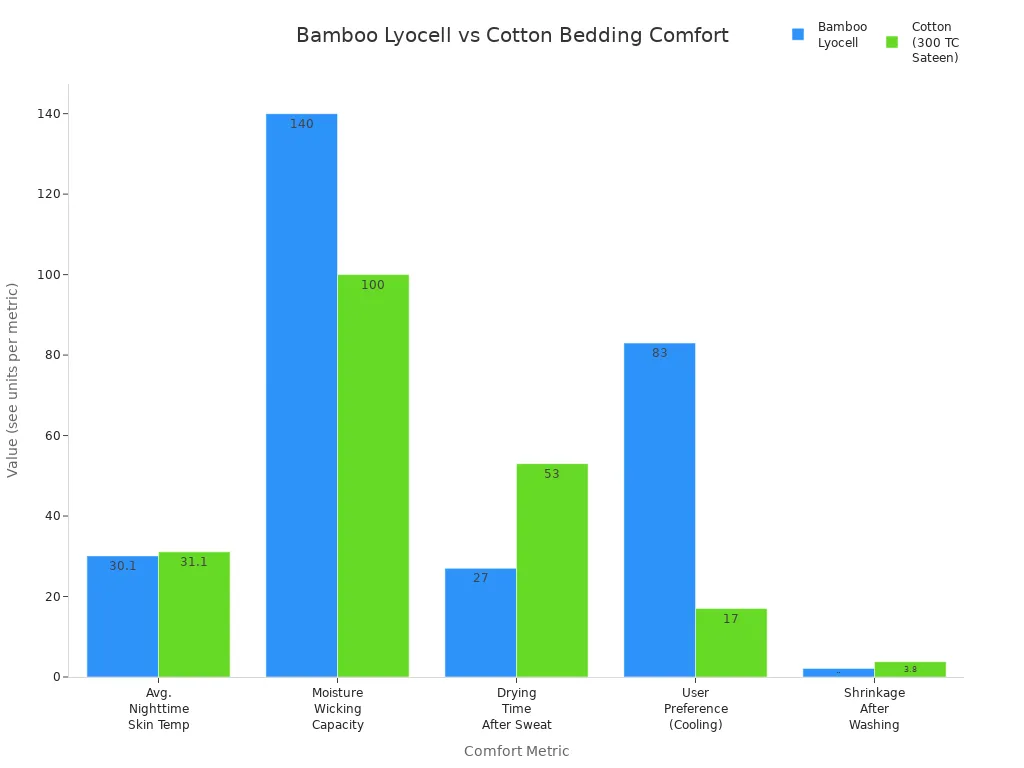
Key Takeaways
Bamboo lyocell is best for cool sleep. People in Arizona liked its silky feel and had less static.
Lyocell bedding feels smooth and gentle. It is made in a way that helps the planet.
Cotton sheets are popular. They feel soft, but some people get hot or sweaty.
Bamboo and lyocell dry quickly after sweating. You stay comfy longer.
Picking bamboo or lyocell bedding helps the earth. They use less water and energy than cotton.
Tip: If your skin is sensitive, bamboo lyocell and lyocell are gentle and hypoallergenic. You will sleep better and wake up feeling good.
What Makes Bedding Comfortable
Softness & Feel
You know that first moment when you slide into bed and the sheets feel soft against your skin? That’s the magic of softness and feel. Bamboo bedding stands out for its silky touch, often feeling softer than polyester sheets. Lyocell also feels smooth and gentle, making it a favorite for people who want a cozy sleep. Cotton sheets can feel crisp or soft, depending on the weave. Sateen weaves give cotton a smoother finish, while plain weaves feel more classic. The way a sheet feels can change how quickly you relax at night.
Bamboo bedding is known for its exceptional softness and silkiness.
Lyocell offers a smooth, gentle feel and is great for sensitive skin.
Cotton varies—sateen is softer, plain weave is more traditional.
Breathability & Temperature
If you get hot at night, you need bedding that keeps air moving. Breathable fabric helps you stay cool and comfortable. Lyocell and bamboo sheets are both breathable, so you won’t wake up sweaty. Cotton is also a breathable fabric, but it can trap heat if the weave is tight. When you pick sheets, look for ones that let air flow easily. This helps your body stay at the right temperature for sleep.
Tip: Breathable bedding is a must for hot sleepers. You’ll sleep cooler and wake up refreshed.
Moisture-Wicking
Nobody likes waking up damp or sticky. Moisture-wicking sheets pull sweat away from your skin. Lyocell is famous for this feature. Bamboo bedding also dries quickly and keeps you feeling fresh. Cotton does a good job, but it’s not as fast as lyocell or bamboo. If you sweat at night, moisture-wicking sheets can make a big difference.
Skin Sensitivity
Your skin deserves gentle care. Some bedding materials can irritate sensitive skin. Lyocell and bamboo are both gentle and hypoallergenic. Cotton is usually safe, but some people find it itchy, especially if it’s not high quality. If you have allergies or sensitive skin, choose bedding that feels soft and doesn’t cause irritation.
Here’s a quick look at how bedding materials affect sleep quality:
Bedding Material | Effect on Sleep Quality |
|---|---|
Cotton | General comfort, varies with conditions |
Polyester | Varies, potential for thermal comfort |
Wool | Helps sleep onset in cool/warm conditions |
Blended Materials | Benefits for specific populations |
Linen | Better sleep in warm conditions |
Goose Down | More slow-wave sleep in cool conditions |
Choosing the right bedding means thinking about softness, breathability, moisture-wicking, and skin sensitivity. You’ll find your perfect match by focusing on what matters most for your sleep.
Lyocell Bedding Comfort
Lyocell Pros
You want sheets that feel soft and keep you comfy. Lyocell, especially Tencel, feels silky and gentle. Many people like how Tencel sheets feel cool and smooth. You will notice this as soon as you get in bed.
Here are some main benefits of lyocell bedding:
Pros of Lyocell Bedding | Description |
|---|---|
Moisture-wicking | Absorbs much more moisture than cotton, good for hot sleepers. |
Naturally antimicrobial | Stops bacteria from growing, so sheets stay fresh longer. |
Exceptionally soft and silky | Feels smooth, almost like fancy silk, but not slippery. |
Temperature regulation | Lets air move, so you sleep at a comfy temperature. |
Wrinkle resistance | Stays smoother and needs less ironing. |
Environmentally conscious | Made from plants with less water and chemicals. |
Tencel fibers pull sweat away from your skin. This helps you stay dry at night. Tiny holes in lyocell let air move through, so you stay cool. Tencel also stops bacteria, so your sheets smell fresh.
Lyocell Cons
No bedding is perfect. Lyocell and Tencel have some downsides you should know.
Con | Description |
|---|---|
Price Point | Lyocell sheets cost more than cotton or polyester blends. |
Wrinkling | Lyocell wrinkles easily, so you need to handle it gently. |
Care Requirements | Lyocell needs gentle washing and drying to last longer. |
Limited Availability | You might not find Tencel sheets in every store. |
Consumer Awareness | Some people do not know what lyocell is or how it is different. |
Tencel bedding can wrinkle if you do not handle it gently. You may need to iron or steam your sheets. Lyocell costs more than regular cotton, but many people think it is worth it.
Unique Features of Lyocell
Lyocell and Tencel bedding have special qualities that make them different from cotton and bamboo. You get a soft and fancy feel every night. The fibers come from plants like eucalyptus and bamboo. These plants use less water and fewer chemicals. They grow back fast, so lyocell is good for the planet.
Eco-friendly production: Tencel uses a system that recycles water and cuts down on waste.
Superior moisture-wicking: Lyocell absorbs more moisture than cotton, so you stay dry and cool.
Gentle on skin: The soft texture is good for sensitive skin and helps stop irritation.
If you want sheets that feel soft, stay fresh, and help the earth, lyocell and Tencel are great choices. You will notice better comfort and sleep right away.
Cotton Bedding Comfort
Cotton Pros
You probably know cotton sheets. They feel familiar and cozy. Many people love cotton because it feels soft and comfortable right away. Kristie Rhodes from Cotton Incorporated says cotton stands out for its softness, breathability, and comfort. These qualities make it a top pick for bedding. You get a fabric that lets your skin breathe and helps you sleep well.
Here are some benefits you’ll notice with cotton bedding:
You get a soft surface that feels gentle on your skin.
Cotton bedding lasts a long time, so you get value for your money.
The fabric breathes well, which helps you stay cool at night.
If you want even more comfort, try organic cotton. It feels just as soft but uses fewer chemicals. Many people choose organic cotton for its natural touch and eco-friendly benefits.
Cotton Cons
Cotton bedding has a few downsides you should know before you buy. Check out this table to see what users often report:
Cons |
|---|
May shrink depending on drying technique used |
Colors will fade |
May wrinkle |
May be more expensive |
You might see your cotton sheets shrink if you use a hot dryer. Colors can fade over time, and the fabric may wrinkle. Sometimes, cotton bedding costs more, especially if you pick organic cotton or high thread counts.
Unique Features of Cotton
Cotton bedding gives you a crisp, classic feel that gets softer every time you wash it. You might notice that organic cotton sheets feel even better after a few washes. The fabric lets air move, so you stay comfortable all night. High-quality cotton, like Egyptian or organic cotton, can last five to ten years if you take care of it.
Cotton sheets age well, becoming softer but still strong.
Organic cotton offers a natural, chemical-free sleep surface.
Cotton holds up to daily use, making it a smart choice for families.
One thing to remember: cotton can hold moisture if you sweat a lot, so it may not dry as fast as bamboo or lyocell. Still, many people love the benefits of organic cotton for its comfort, durability, and familiar feel.
Tip: If you want bedding that feels soft, lasts for years, and comes from natural sources, organic cotton is a great choice for your bed.
Bamboo Bedding Comfort
Bamboo Pros
You might love how bamboo bedding feels on your skin. Many people say it feels even softer than cotton. You will notice the cooling effect right away. Bamboo bedding can keep you 2-3 degrees cooler than cotton while you sleep. This makes a big difference if you get hot at night.
Here are some top benefits you get with bamboo bedding:
Keeps you cool and comfortable all night
Hypoallergenic, so it helps if you have allergies or sensitive skin
Wicks away moisture, so you stay dry and fresh
Makes it harder for dust mites and bacteria to grow
Grows with less water and no pesticides, which helps the planet
You can see why so many people choose bamboo for their beds.
Bamboo Cons
Bamboo bedding has a few downsides you should know before you buy. Check out this table to see what people often report:
Cons of Bamboo Bedding | Description |
|---|---|
Price | Often more expensive than cotton |
Wrinkling | Wrinkles easily |
Shrinkage | Can shrink on high heat dryer setting |
Material Type | Semi-synthetic, not 100% natural |
Durability | May pill or get holes after a few washes |
Fit | Fitted sheets may not stay tight |
Color Discrepancy | Color may look different than online photos |
You might notice wrinkles or shrinking if you use a hot dryer. Some people say their sheets pill or get holes after a few washes. The price is usually higher than cotton, but many think the comfort is worth it.
Unique Features of Bamboo
Bamboo bedding stands out for its silky feel and cool touch. You get sheets that are gentle on your skin and help you sleep better. Bamboo grows fast and needs little water, so it is a smart choice for eco-friendly shoppers. The fabric resists dust mites and bacteria, which helps you wake up feeling fresh. If you want bedding that offers comfort, style, and real benefits for your sleep, bamboo is a great pick.
Tip: Wash bamboo bedding in cold water and dry on low heat to keep it soft and smooth.
Lyocell vs Cotton: Comfort & Sustainability
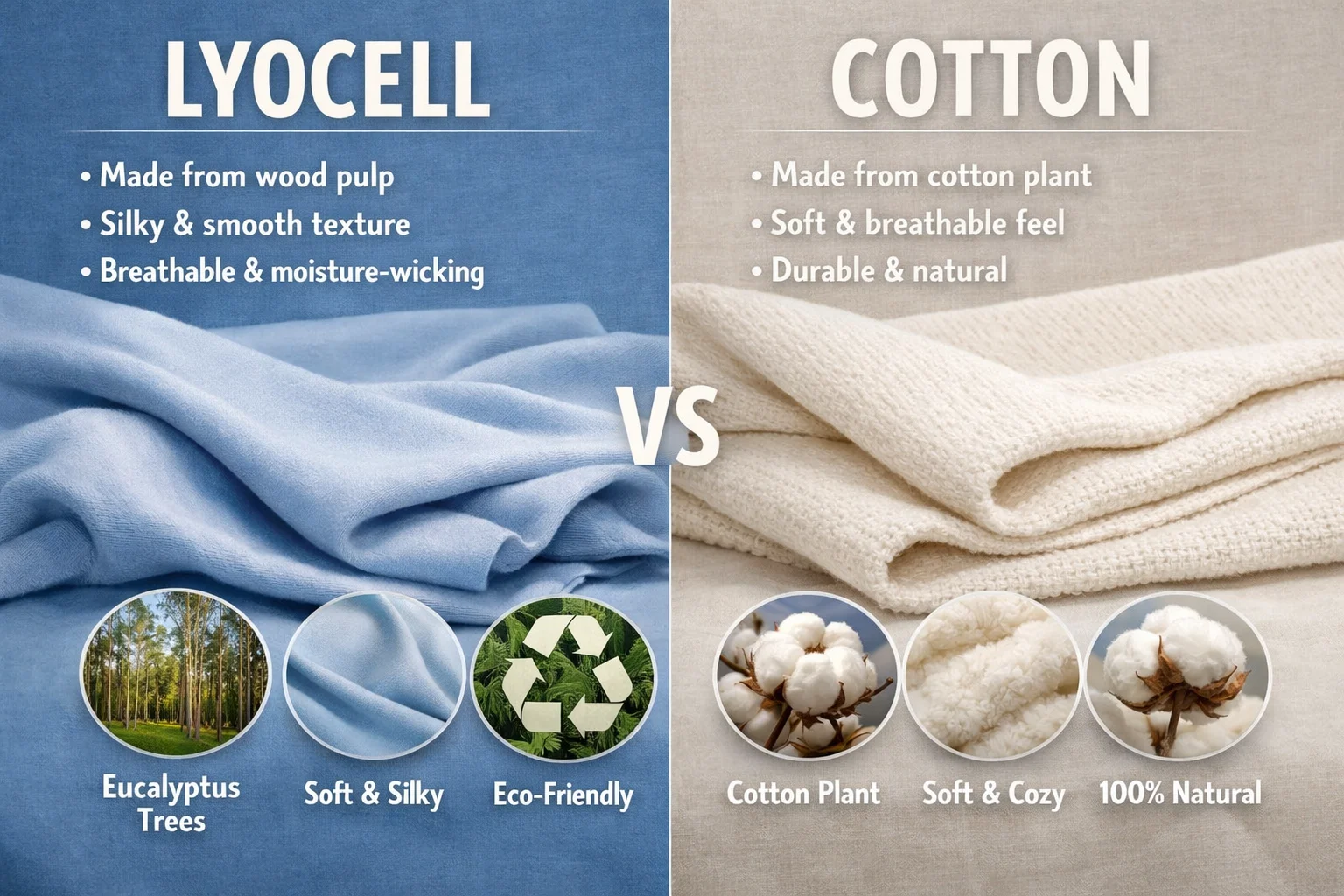
When you look at lyocell and cotton, you want to know which feels better and which is better for the planet. Let’s see how these bedding materials compare for softness, breathability, moisture-wicking, skin sensitivity, and how they help the environment. You will also learn about tencel and organic cotton.
Softness & Feel
You want sheets that feel soft every night. Tencel sheets are made from lyocell. They feel silky and smooth on your skin. Many people say tencel is softer than fancy cotton. When you touch lyocell bedding, you notice it right away. The fibers are smooth and packed close together. This gives you a fancy sleep experience.
Organic cotton sheets can feel soft too, especially after you wash them a few times. How soft they feel depends on the weave and thread count. Sateen organic cotton feels smoother. Percale feels crisp and cool. Some people like the classic feel of cotton. If you want a silkier touch, lyocell might be better for you.
Tip: If your skin is sensitive, tencel and lyocell bedding feel extra gentle. They help stop irritation.
Breathability & Cooling
It is important to stay cool at night for good sleep. When you compare lyocell and cotton, you see big differences in breathability and cooling.
Lyocell absorbs much more moisture than cotton.
Lyocell pulls sweat away from your skin and spreads it out. It dries fast and keeps you cool.
Cotton holds onto moisture longer and dries slowly. This can make you feel warm or damp, especially when it is humid.
Here is a table to show how tencel lyocell and cotton compare:
Feature | TENCEL™ Lyocell | Cotton |
|---|---|---|
Breathability | 88% very breathable | 32% very breathable |
Keeps You Dry After Sweating | 82% yes | 85% no – stays damp |
Feel on Skin | 81% very soft | 50% somewhat soft |
Stays Fresher After Workout | 88% yes | 81% no – holds odor |
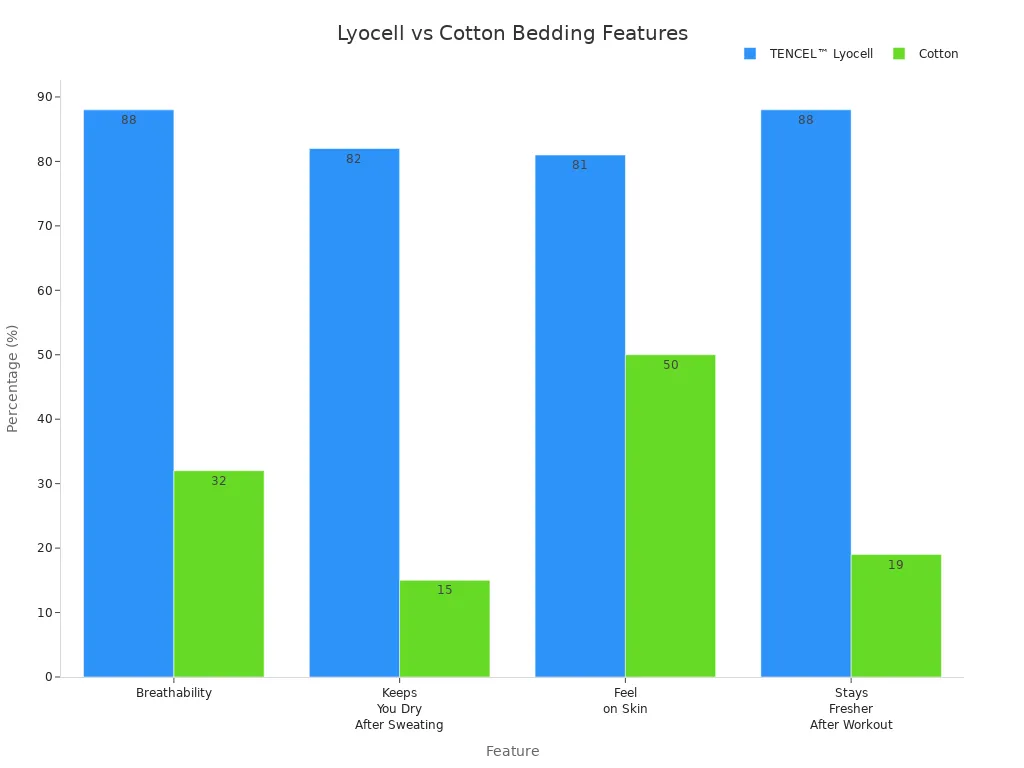
You can see that tencel and lyocell bedding help you stay cool and dry. Cotton may leave you feeling sweaty.
Moisture-Wicking & Skin Sensitivity
If you sweat at night or have sensitive skin, you want bedding that keeps you dry and comfy. Lyocell is great at pulling sweat away from your body. It helps sweat dry fast. This keeps your sheets fresh and dry.
Tencel lyocell is also hypoallergenic. The smooth fibers block dust mites and allergens. This makes it a good choice if you have allergies or skin problems. You will notice less irritation and more comfort.
Organic cotton is gentle for most people, but it does not wick moisture as fast as lyocell. Cotton can stay damp and may hold onto smells after a sweaty night. If you want bedding that stays fresh and helps your skin, lyocell and tencel are good picks.
Sustainable Materials
You care about the earth and want bedding that helps the planet. Let’s see how lyocell and cotton compare for being eco-friendly.
Tencel lyocell uses a process that recycles water and solvents. This uses less energy and water than regular cotton.
Lyocell breaks down in nature if it is not mixed with synthetic fibers.
Tencel comes from trees like eucalyptus. These trees grow fast and need little water.
Organic cotton is grown without bad chemicals or pesticides. It uses less water than regular cotton and helps the soil.
Both tencel and organic cotton can have certifications like GOTS, OEKO-TEX, and Fair Trade. These show they meet strict rules for the environment and workers.
Here is a table of common certifications you might see on eco-friendly bedding:
Certification | Description |
|---|---|
GOTS Certified | Made from 95% certified organic materials, strict worker protections |
MADE SAFE | Nontoxic, screened for 6,500+ harmful substances |
GREENGUARD Certified | Low emissions of VOCs into indoor air |
OEKO-TEX Certified | Free from harmful substances throughout the supply chain |
Fair Trade Certification | Ethical sourcing and fair wages for workers |
Climate Neutral Certified | Brands measure and offset their carbon footprint |
PETA-Approved Vegan | No animal products used |
Oeko-Tex Standard 100 | Free of 100 commonly used toxic substances |
Tencel lyocell is more eco-friendly than most fabrics. Organic cotton is also a good choice if you want to help the planet. Both options help you make your bedroom greener.
Note: When you pick tencel, lyocell, or organic cotton bedding, you help use renewable resources and lower your impact on the earth.
In the end, lyocell vs cotton depends on what you want most. If you want silky softness, cooling, and great moisture-wicking, tencel lyocell is hard to beat. If you like a classic feel and want a natural, eco-friendly choice, organic cotton is a great pick. Both give you comfort and help protect the planet.
Lyocell vs Bamboo: Eco-Friendly Comfort
Comfort Comparison
You want your bed to feel amazing every night. Lyocell and bamboo both give you that soft, cool touch. When you slide into lyocell sheets, you notice a silky, smooth feeling. Bamboo bedding feels even softer to some people. It almost glides over your skin. Both options help you stay cool and dry. If you sweat at night, you’ll love how these sheets wick away moisture.
Bamboo bedding stands out for people with allergies. It’s hypoallergenic and gentle. Lyocell is also great for sensitive skin. You won’t feel scratchy or itchy. If you want bedding that stays fresh, both choices resist odors and bacteria. You get a clean, comfy sleep every time.
Here’s a quick look at how they compare:
Feature | Lyocell | Bamboo |
|---|---|---|
Softness | Silky, smooth | Ultra-soft, silky |
Cooling | Very good | Excellent |
Moisture-wicking | Excellent | Outstanding |
Hypoallergenic | Yes | Yes |
Odor resistance | Yes | Yes |
Tip: If you want the coolest sleep, bamboo bedding might edge out lyocell by a small margin.
Sustainable Materials & Production
You care about the planet. Choosing bedding made from sustainable materials makes a big difference. Lyocell and bamboo both come from plants, but their production methods are not the same.
Tencel lyocell uses a closed-loop system. This means the process reuses 99.5% of water. It also keeps chemicals out of the environment.
Lyocell comes from trees that are harvested in a sustainable way. The process is transparent and follows strict rules.
Bamboo grows fast and needs little water. However, not all bamboo bedding uses eco-friendly methods. Some factories use harsh chemicals and do not recycle water.
Tencel’s production has a lower carbon footprint. It is more regulated than most bamboo bedding.
If you want the most eco-friendly bedding, look for Tencel lyocell or bamboo sheets with clear certifications. These show the company cares about the earth and uses safe practices.
Note: Always check for labels like OEKO-TEX or GOTS. These show your bedding meets high standards for safety and sustainability.
You can sleep better knowing your sheets are good for you and the planet.
Cotton vs Bamboo: Comfort & Durability
Comfort Comparison
You want your bed to feel soft and nice. Cotton and bamboo sheets both make your bed cozy, but they feel different. Cotton sheets feel gentle and familiar. Many people say cotton gets softer after you wash it a few times, like hotel sheets. Bamboo sheets feel crisp when you touch them, but they are also silky and smooth.
Here are some things you might notice:
Cotton sheets can feel rough at first, but they get softer.
Bamboo sheets feel cool and crisp, and stay smooth.
Both types help you relax, but comfort depends on how they are made.
Cotton soaks up moisture, so your bed stays comfy all night.
Bamboo sheets are light and help you stay cool if you get hot.
Tip: If you want sheets that get softer every time you wash them, pick cotton. If you like sheets that feel cool and silky, bamboo is a good choice.
Durability & Sustainability
You want sheets that last and are good for the planet. Bamboo and cotton both have strong points, but bamboo is better for the earth and lasts longer.
Attribute | Bamboo | Cotton |
|---|---|---|
Water Usage | ||
Chemical Dependency | Needs fewer chemicals | Needs more chemicals |
Wrinkle Resistance | Resists wrinkles well | Some wrinkle resistance |
Shape Retention | Keeps its shape very well | Keeps shape okay |
Environmental Impact | Not as good for the environment | |
Long-term Usability | Stays comfy and smooth for longer | Strong but not as eco-friendly |
Bamboo sheets keep their shape and smooth feel after many washes. You do not need to iron them much. The fibers bounce back, so your sheets look neat and feel soft for a long time. Bamboo uses less water and fewer chemicals, which helps the planet.
Cotton sheets are strong and last for years, but they use more water and chemicals to make. If you want sheets that are gentle on the earth and stay smooth, bamboo is a smart choice. If you like classic comfort and strong sheets, cotton is a good pick.
Best Bedding for Different Sleepers
Hot Sleepers
If you get sweaty or feel too warm at night, you need cool bedding. Cotton percale is a good choice for hot sleepers. The loose weave lets air move easily. It feels cool when you touch it. This fabric helps your body stay at the right temperature. It also pulls sweat away from your skin. Many people sleep better and sweat less with cooling sheets. Lyocell and tencel also help you stay dry and cool. These sheets are made in a way that helps the planet.
Cotton percale lets air flow and feels cool.
Lyocell and tencel pull sweat away and dry quickly.
Bamboo sheets are the coolest for some people.
Sensitive Skin
If your skin gets irritated, you need gentle bedding. Bamboo bedding is a great pick. The fibers are smooth and do not cause allergies. You will feel less rubbing and less sweat. Lyocell and tencel are also soft and hypoallergenic. They help stop redness and itching. Organic cotton is safe too, especially if you want bedding without chemicals.
Bamboo bedding is a good choice. Bamboo fibers are smooth and pull away moisture. This means less rubbing and less sweat. People with sensitive skin feel better.
Bedding Material | Benefits |
|---|---|
Silk | Helps stop itching and redness, good for skin problems |
Linen | Lets air move well, stops skin irritation |
Bamboo | Hypoallergenic, less rubbing and sweat, less chance of irritation |
Eco-Conscious Buyers
If you care about the earth, pick bedding that matches your values. Look for bedding with labels like GOTS, OEKO-TEX, or Fair Trade. Lyocell and tencel use less water and make less waste. Organic cotton uses less water and fewer chemicals than regular cotton. Bamboo bedding breaks down in nature and has a small carbon footprint. Always check for eco-friendly labels to be sure.
Certification Name | Overview | Benefits | Why it Matters |
|---|---|---|---|
Global Organic Textile Standard (GOTS) | Top standard for organic textiles, covers good practices. | Guarantees organic fiber, no toxic chemicals, cleans wastewater. | Shows the bedding is good for the earth and workers. |
OEKO-TEX Standard 100 | Checks textiles for harmful chemicals at every step. | Safe for sensitive skin, no bad substances. | Makes buyers feel safe and sure about the bedding. |
Better Cotton Initiative (BCI) | Tries to make cotton farming better for the planet. | Uses water well, less pesticides, more plant variety. | Shows the cotton is grown in a better way, even if not fully organic. |
Fair Trade Certified | Makes sure workers get fair pay and good treatment. | Helps communities and stops unfair work. | Shows the company cares about people and builds trust. |
Cradle to Cradle Certified™ | Checks how green and safe a product is. | Follows recycling ideas and helps improve sustainability. | Shows the bedding is made to be fully green and safe. |
USDA Organic | U.S. label for 100% organic ways. | No fake pesticides or fertilizers used. | Proves the bedding is really organic for buyers who care. |
Value Seekers
If you want bedding that is comfy and lasts long, but does not cost too much, cotton sheets are a smart pick. Organic cotton gets softer after each wash and lasts for years. Lyocell and tencel cost more at first, but they last long and help the planet. Bamboo bedding is strong and breaks down in nature, so you get comfort for a long time and help the earth. Pick bedding that gives you good comfort, lasts long, and is good for your budget and the planet.
You want the softest, coolest sleep. Many experts and shoppers love the Sijo Organic Bamboo Sheet Set for comfort and cooling. If you sleep hot, bamboo or lyocell sheets work best. For sensitive skin, try bamboo or lyocell. If you care about the planet, choose organic cotton, lyocell, or bamboo. Think about what matters most to you.
Have you tried any of these sheets? Share your thoughts or ask a question below!
FAQ
What makes lyocell bedding different from cotton?
You will notice lyocell feels silkier and cooler than cotton. Lyocell comes from a renewable resource and is a biodegradable fabric. It also wicks moisture better, so you stay dry and comfy all night.
Are bamboo sheets really better for hot sleepers?
Yes! Bamboo sheets help you stay cool because they breathe well and wick away sweat. Many people compare tencel vs bamboo for cooling, but both are great eco-friendly options for hot sleepers.
How do I know if my bedding is eco-friendly?
Look for certifications like OEKO-TEX or GOTS. These show your bedding uses eco-friendly fibers and comes from environmentally responsible products. You can also check if the bedding is made from a renewable resource.
Will lyocell or bamboo bedding last as long as cotton?
You can expect lyocell and bamboo bedding to last if you care for them gently. Both use strong, eco-friendly fibers. They resist pilling and stay soft, but avoid high heat when washing or drying.
Is it safe for sensitive skin?
Yes! Lyocell, bamboo, and organic cotton bedding all work well for sensitive skin. These materials use eco-friendly options and are gentle. They help reduce irritation and keep your skin happy.