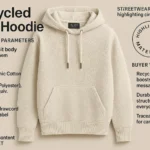
In the world of fast fashion, the hoodie is a cash cow—a high-margin, high-volume staple that sits in every warehouse from Shenzhen to Los Angeles. But in the eyes of a factory owner who has spent 20 years overseeing circular knitting machines and complex tech packs, most hoodies being sold today are, frankly, bad products.
When critics or style purists say hoodies are “bad,” they are usually debating social stigma or office dress codes. But as someone on the manufacturing floor, I define “bad” differently. To us, a hoodie is bad if it lacks structural integrity, if its material science is compromised for profit, and if its lifecycle is engineered to end in a landfill.
If you’ve ever wondered why your $80 “premium” hoodie feels like a rag after five washes, it’s time to pull back the curtain on the garment industry. Here is the hard truth about why the modern hoodie has fallen so far from its utilitarian roots.
1. The Architecture of “The Slump”: Why Your Hood is Failing
The most immediate way to tell a high-quality hoodie from a “bad” one is the hood structure. In factory terms, we look at the GSM (Grams per Square Meter) and the Crown Construction.
The Single-Layer Shortcut
Most retail hoodies—even those from mid-tier “lifestyle” brands—use a single-layer hood or a very thin jersey lining. Why? Because a hood is a massive consumer of fabric. By using a single layer of 250 GSM fleece, a brand saves roughly 0.2 to 0.3 meters of fabric per garment. Over a 10,000-unit production run, that is a massive increase in profit.
The result? The “Sogging Hood.” It has no structural support, so it collapses against your neck, creating a messy, unkempt silhouette. It doesn’t provide warmth, and it certainly doesn’t hold its shape.
The Factory Standard: The Three-Panel Crown
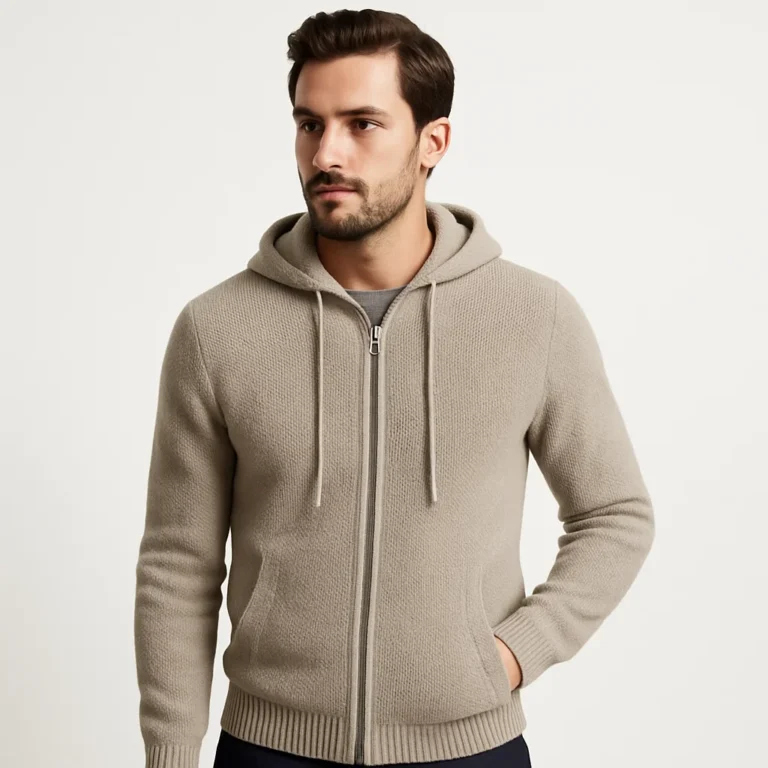
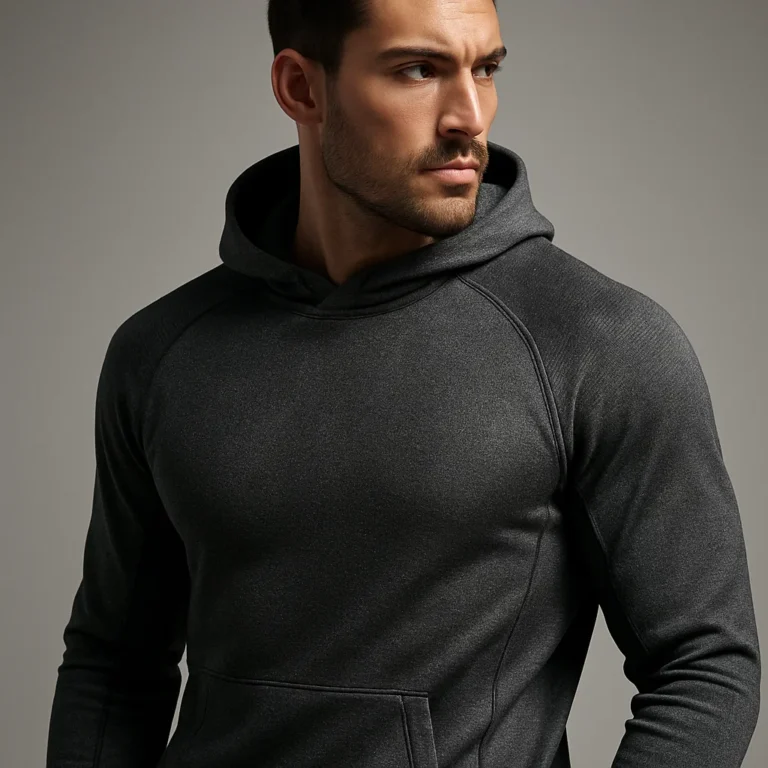
A “good” hoodie requires a double-layered, heavy-duty hood. We advocate for a 3-panel construction (a center strip with two side panels) rather than the cheaper 2-panel “pointy” hood. When we use a 400+ GSM fabric with a 3-panel cut, the hood becomes an architectural element. It frames the face and “stands up” on the shoulders. If the hood can’t support its own weight, the entire garment’s silhouette is compromised.
2. The Material Science Trap: The “Polyester Poisoning” of Cotton
As an independent factory owner, I see the “Material Composition” labels long before they are sewn into the neck. This is where most hoodies become “bad” for the consumer.
The Rise of the 50/50 Blend
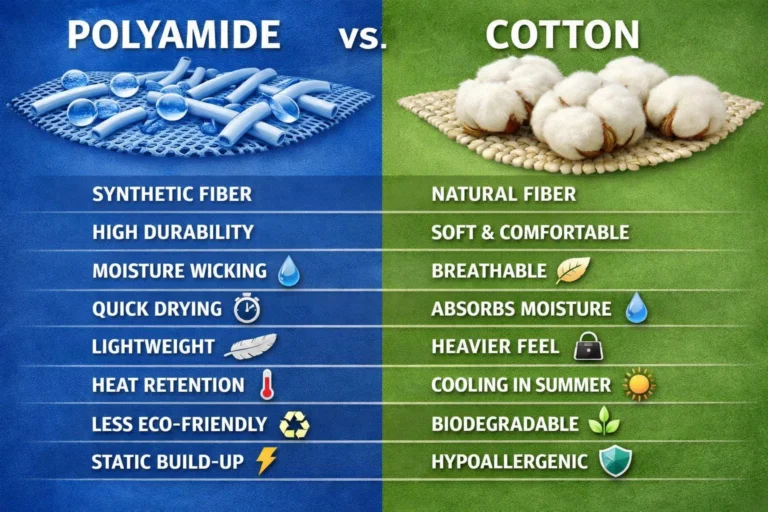
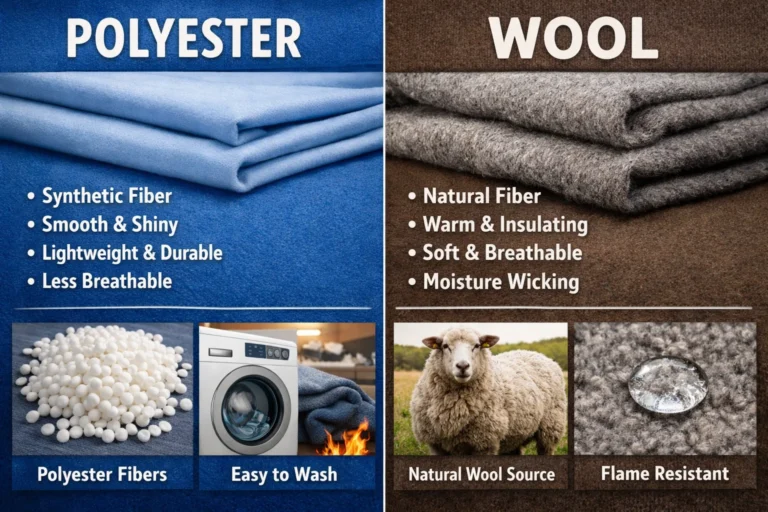
Cotton prices are volatile. To stabilize costs, brands push for high-polyester blends. While a small amount of polyester (around 10-20%) can help with durability and shrinkage, the 50/50 or 60/40 blends found in big-box stores are a disaster for the wearer.
-
Pilling: Polyester fibers are incredibly strong. When they break, they don’t fall off; they tangle with the cotton fibers to create those annoying little balls (pills).
-
Breathability: A high-poly hoodie is essentially a plastic bag. It traps sweat, leads to odors, and feels clammy against the skin.
-
The “Plastic” Handfeel: Cheap factories use a heavy silicone wash to make these polyester-heavy hoodies feel soft in the store. But that softness is artificial; it washes out in the first cycle, leaving you with a stiff, scratchy garment.
The Gold Standard: Long-Staple Combed Cotton
In our facility, we prioritize 100% Cotton or High-Cotton/Low-Poly (85/15) blends using Long-Staple Cotton. We look for Siro-Spun or Compact-Spun yarns. These techniques tuck the loose fiber ends into the yarn, creating a smooth surface that is naturally resistant to pilling without the need for chemical coatings. If your hoodie isn’t made of high-quality yarn, it’s “bad” before it even leaves the knitting machine.
3. The “Hidden” Failures: Ribbing, Seams, and Recovery
A hoodie is only as good as its weakest point. Most brands cut corners on the “trims”—the parts that don’t show up in a flashy Instagram photo but dictate how the garment wears over time.
Ribbing Fatigue
Have you ever had a hoodie where the cuffs and waistband become loose and “wavy” after a few weeks? That is a failure of Ribbing Recovery. Cheap ribbing is made of 100% cotton with poor tension. Quality ribbing must be 2×2 cross-knit and contain at least 5% Spandex (Elastane). This allows the cuffs to snap back to their original shape. In our factory, we stress-test the ribbing tension because a “blown-out” waistband is the fastest way to make an expensive hoodie look like a piece of trash.
The “Overlock” vs. “Coverstitch” Debate
Look at the seams inside your hoodie. If you see messy, loose threads, it’s a “bad” build. We utilize Flatlock stitching or Twin-Needle Coverstitching. This isn’t just for aesthetics; these seams are flatter against the body (preventing chafing) and significantly stronger. A hoodie is a piece of sportswear; its seams should be able to withstand the tension of movement.
4. Why “Fast Fashion” Hoodies are Ethically and Technically “Bad”
The “badness” of a hoodie often extends to its lifecycle. Because a hoodie is a “heavy” garment (using significantly more fabric than a T-shirt), its environmental footprint is naturally larger.
The Pre-Shrinking Secret
Many factories skip the Sanforization (pre-shrinking) process to save time. This means the hoodie you buy in size Large will become a size Medium-and-a-half after the first dry. This “planned obsolescence” forces consumers to buy more frequently.
As an independent manufacturer, we treat our fabric with high-temperature steam and mechanical shrinking before the first cut is made. A garment that doesn’t change size after laundry is a garment that stays out of the landfill.
Chemical Dyes and Water Treatment
The vibrant colors of cheap hoodies often come at a cost. “Bad” factories use low-grade dyes that bleed and fade quickly. More importantly, they may skip proper wastewater filtration. Our perspective is that a quality product must be “clean” from the fiber up. We use OEKO-TEX certified dyes that are safe for the skin and the environment.
5. How to Spot a “Good” Hoodie: The Factory Owner’s Checklist
If you want to stop buying “bad” hoodies, you need to look past the brand name and look at the engineering. Here is what I check when I’m evaluating a competitor’s product:
-
The “Crunch” Test: Squeeze the fabric. It should feel dense and heavy, not “airy” or “squishy.” A heavy hoodie (400 GSM+) will always drape better than a light one.
-
The Neck Tape: Look at the back of the neck. Is there a woven tape covering the seam? If you can see the raw overlock stitch, it’s a low-budget production.
-
The Interior Fleece: Is it “Brushed” or “French Terry”? French Terry (visible loops) is more durable and better for layering. Brushed fleece is warmer but prone to shedding if the brushing process was too aggressive.
-
The Drawstrings: Are they thin, flat shoelaces? Or are they heavy, tipped with metal or high-density plastic? Hardware quality is a massive indicator of the overall production budget.
Conclusion: The Hoodie Deserves Better
The hoodie isn’t “bad” because of who wears it or where it’s worn. It has gained a bad reputation because the industry has treated it as a “disposable” basic rather than a piece of precision engineering.
When you buy a hoodie that is designed with the correct GSM, a 3-panel hood, and high-recovery ribbing, you aren’t just buying “streetwear.” You are buying a piece of garment history that should last a decade. At our factory, we believe that the “best” hoodie is the one you only have to buy once.
Stop settling for “bad” manufacturing. Look for the loops, check the weight, and demand better from your favorite brands.