How Is Cashmere Made? A Technical Guide to the Fiber of Kings
To the consumer, cashmere is defined by its handle: the unrivaled softness and loft that commands a premium price. To the textile manufacturer, cashmere is defined by a rigorous process of subtraction. It is a fiber produced not by abundance, but by scarcity and survival.
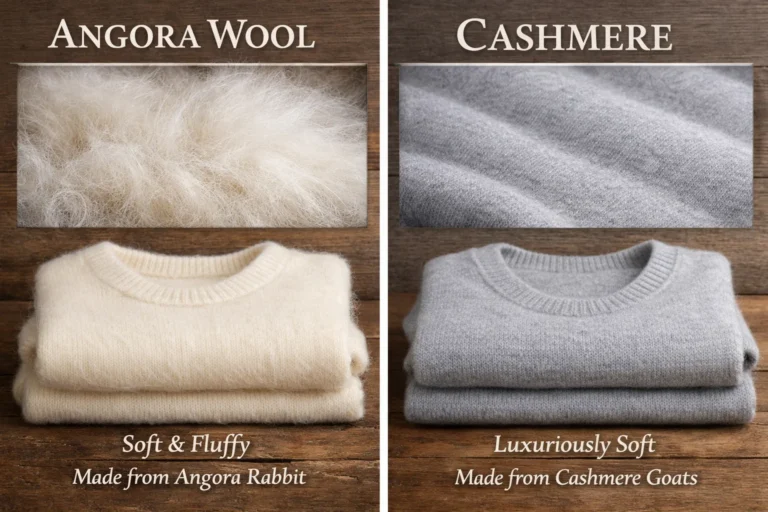
True cashmere is not wool; it is hair. Specifically, it is the fine, downy undercoat of the Capra hircus goat, developed to survive the brutal winters of the Gobi Desert and the Central Asian steppes. The production process is a sequence of critical refinements—harvesting, dehairing, spinning, and finishing—where the goal is to eliminate coarse contaminants to isolate a fiber that is typically less than 19 microns in diameter.
This article details the technical lifecycle of cashmere production, from the high-altitude pastures of Inner Mongolia to the finishing floor.
1. The Source: Geography and Climate
Quality cashmere is strictly a product of geography. The Capra hircus goat produces its soft undercoat (down) only as a response to extreme cold. The primary production regions—Inner Mongolia (China), Mongolia, and parts of the Himalayas—experience winters where temperatures drop below -30°C (-22°F).
In these conditions, the goat develops a dual fleece:
-
Guard Hair: The coarse, outer protective coat (straight, thick, 40+ microns).
-
Down: The insulating undercoat (crimped, fine, 14–19 microns).
If the goats are moved to milder climates (like Europe or North America), the undercoat coarsens, losing the characteristics that define commercial cashmere.
2. Harvesting: The Spring Molt
Harvesting occurs once a year, during the spring molting season (typically April to May) when the goats naturally shed their winter coats. There are two primary methods of collection, which significantly affect the quality and price of the raw material.
Hand Combing (Traditional)
Used primarily in China (Inner Mongolia) and Mongolia, this labor-intensive method involves herders individually combing the goat with coarse iron combs.
-
Advantage: It selectively harvests the molting undercoat while leaving most of the coarse guard hair behind. This results in a higher “yield” of usable fiber during later processing.
-
Process: A single goat yields only about 250–500 grams of greasy (unprocessed) fiber per year.
Shearing (Industrial)
Common in Australia, Iran, and Afghanistan. The entire fleece is shorn off, similar to sheep wool.
3. Sorting and Scouring
Once collected, the “greasy” cashmere arrives at sorting facilities. Here, it is hand-sorted by color—White (the most valuable, as it requires less bleaching), Light Grey, and Brown.
The fiber is then scoured (washed) to remove dirt, grease (lanolin), and vegetable matter.
4. Dehairing: The Critical Value-Add
This is the most technologically demanding stage of cashmere production. The scoured fiber is a mix of valuable down and useless guard hair. If the guard hair is not removed, the final fabric will be itchy and cheap.
The fiber is passed through a series of dehairing machines that use mechanical force and centrifugal separation to strip away the coarse hairs.
-
The Yield Loss: The “dehairing yield” is the critical economic factor. From the original greasy weight, the yield of usable, dehaired cashmere is often only 20% to 50%.
-
Standard: High-quality weaving or knitting cashmere typically requires a residual guard hair content of less than 0.5%.
5. Grading: Defining Quality
After dehairing, the fiber is graded based on two primary metrics:
-
Micron (Diameter): The lower the number, the softer the hand.
-
Grade A: 14.0 to 15.5 microns. (The gold standard).
-
Grade B: 16.0 to 19.0 microns.
-
Grade C: > 30 microns (Often classified as “cashgora” or coarse hair).
-
Fiber Length: Longer fibers (34mm–36mm+) produce stronger yarn that pills less. Shorter fibers (often broken during aggressive dehairing) result in weaker yarn and garments that pill quickly.
6. Spinning: Woolen vs. Worsted
Cashmere yarn is spun on one of two systems, creating distinctly different end products.
The Woolen System (Most Common)
-
Process: The fibers are carded but not combed flat. They remain jumbled and multidirectional before being twisted into yarn.
-
Result: This traps air pockets, creating a yarn that is lofty, fuzzy, and incredibly warm. This is the standard for the classic 2-ply cashmere sweater.
-
Ply: Most high-quality knitwear uses 2-ply yarn (two strands twisted together) to balance the torque and prevent the garment from spiraling (twisting) while worn.
The Worsted System (Less Common)
-
Process: The fibers are combed parallel before spinning, removing short fibers and air pockets.
-
Result: A smooth, lean, and dense yarn. Worsted cashmere is typically used for fine suitings, lightweight scarves, or high-end woven fabrics where drape is prioritized over “fluffiness.”
7. Knitting and Weaving
-
Knitting: Industrial knitting machines (e.g., Shima Seiki or Stoll) knit the yarn into panels. Gauge is critical here; a 12-gauge knit (standard for sweaters) requires a finer yarn than a 7-gauge (chunky knit).
-
Weaving: Used for scarves and outerwear. Cashmere yarns are often sized (coated with starch) to withstand the high tension of mechanical looms, then desized during finishing.
8. Finishing: The Art of the Handle
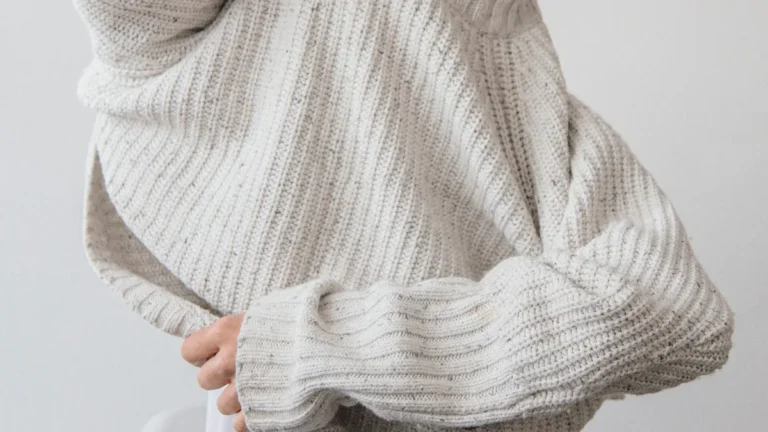
When a cashmere sweater comes off the knitting machine, it does not feel like cashmere. It feels wiry, greasy, and tight. The “hand” is created in the finishing department.
-
Milling (Fulling): The garments are washed in industrial machines with specific detergents and softeners. The combination of heat, moisture, and friction causes the fibers to burst and relax.
-
Control: This is a dangerous step. If milled too long, the garment shrinks to a child’s size. If milled too short, it remains rough.
-
Drying & Steaming: The garment is dried and then steam-pressed to set the final dimensions and stabilize the fabric.
9. Sustainability and Ethics
The high price of cashmere has led to herd expansion in Mongolia, causing significant overgrazing and desertification of the grasslands.
-
Traceability: Modern brands now rely on standards like the Sustainable Fibre Alliance (SFA) or the Good Cashmere Standard (GCS). These certifications track the fiber from the herder to the final garment, ensuring animal welfare (pain-free combing) and pasture management (rotational grazing to protect the soil).
10. Why Is Cashmere Expensive?
The cost is driven by biology and processing loss.
-
Scarcity: One goat produces enough fiber for only 1/3 of a sweater per year.
-
Processing: The 50%+ weight loss during dehairing means the manufacturer pays for double the material they actually use.
-
Labor: Hand-combing and manual sorting are time-consuming processes that cannot be fully automated without sacrificing quality.