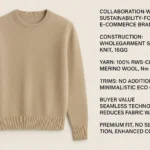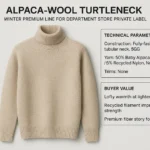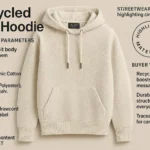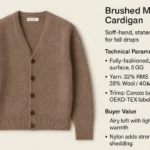

Introduction
When import prices move against you, the fastest lever is usually the crudest one: shave cost out of the product until the margin line looks right again. For a DTC or influencer knitwear brand, that lever is also the one that quietly destroys the asset you have been building — the customer’s belief that your sweater is worth what you charge for it.
A 5.6% import-price environment is a pressure, not a verdict. It tells you that landed costs are moving and that the gap between your quoted price and your realised margin has to be closed somewhere. It does not tell you which fibre to buy, and it should not be read as a statement about how any particular yarn’s price has moved. What it does is force a decision you may have been deferring: where in the fibre mix do you absorb pressure, where do you offset it, and where do you refuse to cut at all?
That decision is a sourcing strategy question, not a “which fibre is best” question. Cashmere, merino, alpaca and blends each win on different criteria and lose on others, and the right answer depends on the product role, the price tier and whether you intend to reorder the style. This article compares the four routes across four criteria — perceived value, durability, price control and repeatability — using published fibre-property documentation, standards documentation and AzKnit’s stated yarn and sampling capabilities. The goal is a fibre strategy you can defend to a customer, not a cheaper sweater you have to apologise for.
Key Takeaways
No fibre wins all four criteria. Cashmere leads on perceived value, merino on repeatable fine-gauge basics, alpaca on warmth and texture differentiation, blends on price control — the choice is a trade, not a ranking.
Fibre diameter, not fibre name, drives softness and prickle. Merino typically runs from under 17.5 microns to about 22–24 microns, and the finer bands are what make next-to-skin wear comfortable.
Blends are the main lever for price control without a visible downgrade — a carefully chosen ratio can hold handfeel while reducing the costliest component.
Repeatability is a planning and documentation problem as much as a fibre problem. Shade bands, retained lots and a shared physical standard decide whether season two matches season one.
Match each certification claim to what the standard actually covers. Product-safety testing and animal-welfare chain-of-custody schemes are different kinds of assurance and should be described differently.
Quick Comparison: The Four Fibre Routes at a Glance
The matrix below summarises the trade-offs developed in the sections that follow. Read it as a map, not a scorecard: the “winner” in any row depends on what the garment has to do and what the customer expects to pay.
Criterion | Cashmere | Merino | Alpaca | Blends |
|---|---|---|---|---|
Perceived value | Strongest luxury signal; fineness below the legal 19-micron ceiling reinforces it | Credible fine-wool story, especially in the finer micron bands used for next-to-skin knits | Differentiation through loft, warmth and texture rather than prestige naming | Depends entirely on composition story; a small cashmere share can lift perception, a vague ratio can read as dilution |
Durability | Soft but less resilient in hard daily wear; pilling risk rises with short fibre and loose twist | Good resilience and shape recovery; pilling behaviour governed by fibre length, twist and cover factor | Warm and lofty; performance tied to yarn structure and finishing | Can offset a fine fibre’s weaknesses — e.g. a wool partner adds recovery and abrasion resistance |
Price control | Least price control; scarce raw material and specialist spinning | Moderate; broad supply base and many stock-supported yarns | Moderate; niche supply, so availability matters as much as price | Strongest lever — ratio, partner fibre, count and gauge all adjust cost |
Repeatability | Hardest at small volume; premium yarns are booked in limited batches | Easiest, particularly in stock-supported shades | Workable but dependent on spinner stock and lot continuity | Good if the ratio and yarn source are locked and documented |
Best product role | Hero knit, gifting, travel-weight layering | Next-to-skin fine knits, repeatable core basics | Statement texture pieces, cold-weather outer layers | Volume programmes, entry price tiers, seasonal test colours |
Price-tier fit | Premium and above | Mid to premium | Mid to premium, positioned on warmth | Entry to mid, and premium where the ratio justifies it |
Perceived Value: Which Fibre Carries the Price Tag Your Customer Expects?
Perceived value is not a property of the fibre. It is the customer’s inference about what the garment is worth, drawn from the label, the handfeel, the price and the story. The four routes supply that inference in different ways.
Cashmere carries the strongest and most portable signal. Its scarcity is real: a single goat yields a small quantity of usable undercoat each year, and the fibre sits at the top of the natural-fibre hierarchy in value terms even though it is a rounding error in volume. The legal definition most buyers work to — fibre from the cashmere goat averaging no more than 19 microns, with no more than 3% by weight exceeding 30 microns — is itself a quality floor, which is why fineness below that ceiling is the detail worth specifying. Two sweaters both labelled 100% cashmere can differ substantially in yarn cost and in how they look after a winter.
Merino earns credibility differently. Woolmark describes merino as the finest and softest sheep’s wool, and its fineness range is documented: typically under 17.5 microns up to around 22–24 microns, with fibres generally below about 19.5 microns prized for next-to-skin garments and fine knitwear, 19.5–22 microns common in apparel knitwear, and 22–24 microns used in outerwear. That gives you a defensible, specific claim — “17.5-micron merino” is a better story than “soft wool” — and a next-to-skin narrative that does not depend on luxury naming.
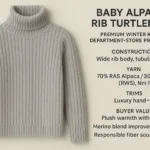
Alpaca differentiates on loft and warmth rather than prestige. It is a texture and performance story: the fibre’s bulk traps air, which is what makes a lofty knit feel warm for its weight. That is a genuine point of difference for a brand whose customer already owns plain merino and does not need another one.
Blends are where perceived value becomes a communication problem. A blend can read as a downgrade if the composition story is poorly told — the customer sees a reduced percentage of the expensive fibre and concludes the brand is cutting corners. Told well, the same blend reads as engineering. A small cashmere percentage in a wool-rich yarn can upgrade perceived value in a retail garment, and a cashmere-silk blend adds a lustre and drape that matte pure cashmere does not have, which photographs well and signals luxury on a product page.
Composition labelling is the foundation of either outcome. If the label states the exact percentages by weight, the marketing story has something true to stand on; if it does not, the story is exposed the moment a customer reads the care label. Certification can support the narrative, but only where the claim matches the standard — a point covered later.
Verdict: cashmere protects perceived value best at premium tiers where the retail price can carry the yarn cost. Merino protects it at mid tiers where fineness and next-to-skin comfort are the credible claim. Alpaca protects it where warmth and texture are the differentiator. Blends protect it at entry and mid tiers — and at premium tiers only when the ratio and the story are both deliberate.
Durability: Where Each Fibre Resists Wear — and Where It Doesn’t
Durability is where fibre marketing most often outruns the evidence. The honest starting point is that wear performance is a yarn-and-knit decision as much as a fibre choice, and that pilling in particular is a complex phenomenon nobody can fully guarantee against.
Woolmark’s guidance is unusually concrete on this. Pilling is caused by rubbing during wear, concentrated at the elbows, armpits, sleeves, belly and the sides of the sweater where the arms contact the body. Because it is so complex, no one can guarantee it will not occur — but the design levers are known: use longer fibres, use the highest twist factor you can handle, and use fabrics with a higher cover factor. Those are spinning and knitting decisions. They apply to cashmere as much as to wool, and they are the reason two garments in the same fibre can behave completely differently.
Fine fibres trade softness against abrasion resistance. The same fineness that makes a fibre pleasant against the neck makes it less robust in hard daily use. Paul James Knitwear puts the cashmere-versus-merino trade-off plainly: against extra fine merino, the trade is softness for resilience — merino recovers its shape better, tolerates being packed into a bag and can be worn considerably harder, while cashmere feels better against the neck. That is a product-role statement, not a defect.
Blends can offset a fine fibre’s weaknesses. Combining fibres with complementary weaknesses is the standard rationale for blending in knitwear: a wool partner contributes recovery and abrasion resistance while the finer fibre contributes handfeel. The ratio matters — a small change in percentage can noticeably alter the hand — which is why the blend specification belongs in the tech pack, not in a verbal agreement.
Tie durability claims to a defined test or care regime. “Long-lasting” is not a specification. If you intend to claim durability, define what you mean: a pilling test result on a named method, a wash-cycle protocol, a care instruction set that the garment was actually tested against. Woolmark notes that pilling risk also depends on the wearer’s activity and on abrasion from surfaces like a desk, so a claim should describe the conditions it holds under.
Verdict: for next-to-skin fine knits, choose the finest fibre the brief can carry and control pilling through fibre length, twist and cover factor. For hard-wearing outer layers, weight and structure matter more than fibre prestige — a chunkier, firmer knit will outlast a delicate one regardless of what the label says.
Price Control: Protecting Margin Without a Visible Quality Cut
This is where the 5.6% environment gets answered. The strategy is not to find a cheaper version of the same sweater; it is to decide where pressure is absorbed, where it is offset by a change the customer cannot see as a downgrade, and where it is passed through because cutting would cost more than it saves.
The levers available short of blanket cost cutting:
Fibre substitution at equal or better perceived value. Moving a core basic from a fine luxury fibre to a fine merino in the 17–19 micron band can hold the softness story while changing the cost base substantially. The customer still gets a next-to-skin knit; the label still tells a true story; the margin recovers.
Blend ratios that hold handfeel while reducing the costly component. This is the most precise lever. A 50/50 cashmere-wool yarn is reported by one spinner to price roughly 50–60% below the equivalent pure cashmere specification, which is what makes cashmere-blend positioning viable at a $100–200 retail price point where higher-cashmere ratios cannot work. At the other end, an 80/20 cashmere-silk yarn is reported at roughly 10–15% above pure cashmere at the same count — a cost increase, not a saving, but one where the perceived value to the end consumer often exceeds the increase because the lustre and drape signal luxury in a way matte cashmere does not. Both examples illustrate the same principle: trade cost against value deliberately, rather than cutting cost and hoping value survives.
Yarn count and gauge. A finer count at a higher gauge uses less fibre per garment and produces a lighter, more refined hand; a coarser gauge uses more fibre and reads as a heavier, more casual product. Neither is better in the abstract, but the choice changes both cost and positioning, and it should be made against the product role rather than inherited from last season.
Order planning against dye-lot and minimum-batch constraints. Custom-dyed shades carry minimum dye batches — one spinner cites 20 kg per colour for custom top-dyed shades against 1 kg per colour for stock-supported shades. Splitting a small order across many custom colours can therefore force you to buy more yarn than the order needs, which is waste dressed up as flexibility. Consolidating the palette, or choosing stock-supported shades for test colours, converts that waste back into margin.
Be clear about what the 5.6% figure is: the environment you are operating in. It is not a forecast for any fibre, and no sourcing strategy guarantees a price outcome. What a fibre strategy does is determine where you have room to move when the environment tightens.
Verdict: blends give the most price control per unit of perceived-value risk, because the ratio is a dial you can turn in small increments. Merino gives the next most, through substitution and stock-supported yarns. Alpaca and cashmere give the least — with cashmere, the lever is usually the blend ratio rather than the fibre itself.
Repeatability: Keeping Shade, Handfeel and Composition Consistent on Reorder
Repeatability is the criterion that decides whether a fibre strategy survives a second season. A hero knit that cannot be reordered in the same shade is a one-season product with a two-season marketing plan.
Dye-lot and yarn-lot continuity is a planning discipline. The commercial problems usually appear not on the first order but when a successful style needs repeating and the original yarn route is no longer available in the same way. The controls are ordinary and worth asking for by name: a shade band — a set of physical references marking the acceptable spread either side of the approved standard, not a single point — plus shade sorting, where rolls or garments are grouped into families that cut together, with the grouping stated on the packing list so all panels of one garment come from within one group.
Decide replenishment status at the first purchase order. Quantities close to the minimum by colour need an explicit split. Define quantity by colour and size ratio, because that information affects both manufacturing planning and material feasibility. If you expect to replenish, the order should specify whether extra yarn is to be reserved, whether an approved lot must be retained, and how long retention should last. A seasonal test colour should be defined as non-replenishable unless yarn is reserved; a long-running core colour should have a sealed standard, a lot record and a replenishment plan.
Approve against a shared reference, not against tolerance alone. Two submissions can each sit inside tolerance against the standard and still be visibly apart from each other. If you are comparing vendors, have both submit against the same physical standard at the same time and compare the submissions to each other as well as to the reference. For multi-colour or jacquard designs, approve a complete knit-down with all colours and record each yarn code, because individual approvals may not protect the final contrast.
Fibre choice affects repeatability directly. Stock-supported shades and reserved capacity shorten repeat lead times dramatically — one spinner reports stock-supported orders shipping in 5–7 working days and repeat orders on blanket arrangements in as little as 3–5 working days, against 2–3 weeks for custom blend orders after specification confirmation. Cashmere is the hardest route to repeat at small volume: premium yarns are booked in limited-capacity batches, and one factory group reports Grade A and baby cashmere often needing to be booked 6–8 weeks ahead.
Document what a reorder needs to match. At minimum: the approved physical standard, the yarn lot or lot record, the exact composition by weight, the spinner and count, the gauge and stitch structure, and the finishing route. Without those, a reorder is a new development project wearing the same style number.
Verdict: merino and wool-rich blends are easiest to repeat at small volumes, particularly in stock-supported shades. Alpaca is workable where the spinner holds stock. Cashmere is repeatable but demands forward planning and, often, a yarn reservation.
Certification and Traceability: Matching the Claim to the Standard
Certification claims are where well-intentioned brands most often overreach, usually by treating all standards as the same kind of assurance. They are not.
Product-safety testing. OEKO-TEX STANDARD 100 is a label for textiles tested for harmful substances, setting a benchmark for textile safety from yarn to finished product. Every item bearing the label is certified as having passed safety tests for the presence of harmful substances, with requirements scaled to intended use — the more intensive the skin contact and the more sensitive the skin, the stricter the human-ecology requirements. This is a product claim about chemical safety. It says nothing about animal welfare or fibre origin.
Animal-welfare and chain-of-custody standards. The Responsible Wool Standard (RWS), Responsible Mohair Standard (RMS) and Responsible Alpaca Standard (RAS) are international, voluntary standards that address animal welfare at farm level and chain of custody from certified farms to the final product. RWS covers sheep farms and wool; RMS covers goat farms and mohair; RAS covers alpaca farms and alpaca fibre. Each requires certification across the supply chain — for RMS, all sites from farms through to the seller in the final business-to-business transaction — and each provides verification of practices at farm level so brands can make claims about their sourcing with confidence. These are assurance about how the fibre was produced and how it moved through the chain, not about chemical safety in the finished garment.
Describe each accordingly. “OEKO-TEX certified” is a safety statement. “RWS-certified wool” is a welfare and custody statement. Using one to imply the other is the kind of claim that survives a product page and fails a diligence request.
Blend certifications must match the blend. A cashmere-merino blend claiming RWS certification needs the merino portion to actually be RWS-certified merino. One factory group reports catching blend mislabelling in around 15% of first-time cashmere runs — which is a reason to ask for the scope certificate and transaction certificates, not just a logo file.
AzKnit states that it routinely develops in RWS, RMS, RAS, organic cotton and recycled nylon, and that on request it includes certification statements and traceability notes for marketing. Treat that as a capability to confirm per order and per fibre content, not a blanket guarantee that any given style will carry any given certificate.
Verdict: decide which claim your brand actually needs — safety, welfare, custody or all three — and specify it in the quote request so the cost and the documentation are priced in from the start rather than discovered at shipment.
Building the Sourcing Brief: What to Put in a Quote Request
Fibre quotations are not interchangeable costs. One quote may include dyeing, another may rely on stock shades, and a third may exclude freight, testing or specialised washing. To compare them, the brief has to fix the variables.
What a quote request needs:
Fibre and exact composition by weight. “Cashmere blend” is not a specification. State the percentages and, where relevant, the micron band or the named yarn.
Yarn count and gauge. These determine fibre consumption per garment and therefore cost, and they interact with the hand and the product role.
Target GSM and garment weight. Weight is the most direct driver of material cost; without it, two quotes may describe different garments.
Colour and quantity by colour and size ratio. This is what determines whether you fall inside a minimum dye batch or trigger a surcharge, and whether a reorder is feasible.
Whether shades are stock-supported or custom-dyed. Stock shades shorten lead time and reduce minimums; custom shades buy differentiation at the cost of batch minimums.
Certification requirements. Name the standard and the fibre it applies to, so the certification cost and documentation are quoted rather than assumed.
Sampling and reorder expectations. State how many sample rounds you expect, whether you want yarn reserved for replenishment, and how long an approved lot should be retained.
Incoterms, duty and landed-cost assumptions. Name the delivery place and the applicable Incoterms version, the payment schedule, quotation validity, packing and freight assumptions. Ask the supplier to distinguish sampling time, material procurement, bulk production, testing and dispatch — and to state whether the quoted lead time starts at deposit, PO confirmation, colour approval or receipt of final artwork.
Each of these changes the price for a reason you can explain. Composition changes the raw material cost. Count and gauge change consumption. Colour split changes whether you pay a dye-batch minimum. Certification changes testing and audit cost. Incoterms change who carries freight and risk. When the brief fixes all of them, the cheapest quote is the cheapest garment — not the cheapest set of assumptions.
Hidden costs enter at the same points: freight and duty under the chosen Incoterm, minimum dye batches on small colour splits, testing and certification fees, and reorder costs when the original yarn lot is no longer available.
Who Should Choose Which Fibre Route
Recommendations are conditional on product role and price tier. Find the profile closest to yours and read the reasoning, not just the fibre.
Premium DTC label testing a hero knit. Cashmere, or a high-cashmere blend, protects perceived value best — but only with a repeatability plan attached. Specify the micron band, book the yarn early enough to cover a second production run, and decide at the first PO whether to reserve yarn for replenishment. If the retail price cannot carry pure cashmere, a 90/10 cashmere-wool or an 80/20 cashmere-silk gives a defensible luxury story at a workable cost.
Volume-driven influencer brand needing durable, repeatable basics. Merino or a wool-rich blend. Choose a fine micron band for next-to-skin pieces, control pilling through fibre length, twist and cover factor, and work in stock-supported shades so a restock does not become a redevelopment. This is the profile where repeatability matters most, because the business model depends on selling the same product again.
Brand differentiating on warmth and texture. Alpaca or an alpaca blend. Lead with loft and warmth rather than prestige, and confirm spinner stock before committing to a colour range, because niche supply constrains both availability and repeat lead time.
Cost-sensitive launch where margin is tight. A well-chosen blend that protects margin without reading as a downgrade. Fix the ratio, tell the composition story honestly, and keep the palette tight so dye-batch minimums do not eat the saving.
The edge case: when a single-fibre strategy is wrong. If your range spans a next-to-skin layering piece, a hard-wearing everyday knit and a statement texture piece, forcing all three into one fibre serves none of them. A mixed-fibre range — fine merino for the base layer, a wool-rich blend for the everyday knit, alpaca for the statement piece — lets each product carry the claim it can actually support, and spreads your exposure across fibre markets rather than concentrating it in one.
Sampling and Scaling a Fibre Decision with AzKnit
A fibre decision is easier to make with a sample in hand than with a comparison table. AzKnit’s stated terms for testing one before committing are: sampling turnaround of 3–5 days, minimum order quantities from 50 pieces, bulk production of around 3 weeks, and a yarn range that includes cashmere, merino, alpaca, mohair, cotton, linen, acrylic and custom blends, with cashmere blends in the 10–20% range among the options.
Those terms matter most at the point where a fibre strategy usually stalls: the gap between “we think a 70/30 blend will hold the hand” and “we know it will.” A short sampling cycle and a low minimum let you knit the candidate blend, wash it, check the hand and the pilling behaviour, and compare it against the pure-fibre version before you commit a season’s budget. The same low minimum is what makes a test colour viable without triggering a dye-batch commitment you cannot sell through.
If you want to take the next step, three low-commitment options: request a yarn book to see the available fibre and blend range, ask for a sampling consultation on a specific product role, or request a quote range against a completed sourcing brief.
FAQ
Which fibre is best for my product?
There is no best fibre in the abstract. Match the fibre to the product role and price tier: cashmere or a high-cashmere blend for a premium hero knit, fine merino for next-to-skin basics and repeatable core styles, alpaca for warmth and texture differentiation, and a well-specified blend for entry and mid tiers where margin is tight. Then check the choice against repeatability — a fibre you cannot reorder in the same shade is a one-season decision.
How do I protect perceived value when import costs rise without a visible quality downgrade?
Change something the customer cannot see as a cut. Substituting a fine merino for a luxury fibre in a basic, adjusting a blend ratio to reduce the costliest component while holding the hand, or moving to a lighter count at a finer gauge all change the cost base without changing the story — provided the composition label and the marketing claim stay accurate. What damages perceived value is a vague composition story, not a deliberate one.
How do I keep quality and shade consistent across reorders?
Plan for it at the first order. Approve a physical standard rather than a single colour point, define quantity by colour and size ratio, and state whether extra yarn is to be reserved, whether an approved lot must be retained and for how long. Record the composition, yarn lot, spinner, count, gauge and finishing route so a reorder has something to match against. Where possible, use stock-supported shades for styles you intend to repeat.
What should I include in a quote request so fibre prices actually compare?
Fix the variables: exact composition by weight, yarn count and gauge, target GSM and garment weight, colour and quantity by colour and size ratio, whether shades are stock-supported or custom-dyed, certification requirements, sampling and reorder expectations, and Incoterms with duty and landed-cost assumptions. Ask the supplier to break out sampling, material procurement, bulk production, testing and dispatch, and to state when the lead time starts.
What do OEKO-TEX, RWS, RMS and RAS actually certify?
OEKO-TEX STANDARD 100 certifies that a textile has been tested for harmful substances, from yarn to finished product — a product-safety claim. RWS, RMS and RAS are voluntary animal-welfare and chain-of-custody standards covering sheep and wool, goats and mohair, and alpaca respectively, verifying farm-level welfare and custody from certified farms to the final product. They are different kinds of assurance and should be described as such; a blend claim also requires the relevant portion of the blend to be certified.
Verdict: A Fibre Strategy, Not a Fibre Winner
Criterion | Conditional winner | Why |
|---|---|---|
Perceived value | Cashmere at premium tiers; merino at mid tiers; blends where the ratio is deliberate | Prestige, fineness and composition story each carry a different price tag |
Durability | Merino and wool-rich blends for daily wear; heavier structures for outer layers | Resilience and shape recovery, plus control of pilling through fibre length, twist and cover factor |
Price control | Blends, then merino substitution | The blend ratio is a dial that adjusts cost in small increments without a visible downgrade |
Repeatability | Merino and wool-rich blends in stock-supported shades | Shorter repeat lead times and fewer lot-continuity constraints at small volume |
The pattern across the four criteria is consistent: the fibre that wins on perceived value is not the fibre that wins on price control or repeatability. A brand that optimises for one criterion across its whole range will lose on the others. A brand that assigns each product the fibre route its role can support — and documents composition, certification and lot continuity accurately — protects both quality and margin.
That is what material expertise buys you in a 5.6% import-price environment. Not a cheaper sweater, but a defensible one: a fibre and blend mix chosen against product role, a composition and certification story that holds up to scrutiny, and a repeatability plan that keeps season two matching season one. Blanket cost cutting cannot do that, because it removes value and price together and leaves the customer with no reason to pay either.
If you want to test a fibre or blend before committing, request a yarn book or a sampling consultation.