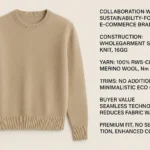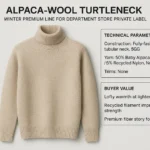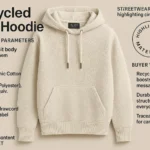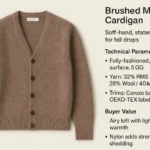

When you hear synonyms for knitwear, you might think of terms like pullover, jumper, tricot, knit, knitting, hosiery, knitted fabric, or knitwork. These synonyms for knitwear have different meanings. Some refer to garments, while others describe the material or the process used to make it. Textile experts often compare knit fabric and woven fabric. Here’s an example:
Aspect | Knit Fabric | Woven Fabric |
|---|---|---|
Manufacturing | Loops of yarn | Groups of yarn crossed |
Structure | Soft and stretches | Strong and holds its shape |
Uses | T-shirts, leggings | Jeans, dress shirts |
Both types use yarn and can be made from various fibers. You’ll learn simple definitions for each synonym for knitwear and see how to use them correctly.
Key Takeaways
Knitwear has clothes like sweaters, cardigans, and hoodies. Each one has its own style.
Knowing garment words helps you talk about what you wear. It also helps you shop better.
Fabric words like tricot and knit show how knitwear is made. They also tell you about its features.
Hosiery means knitted things for your feet and legs. This includes socks and tights.
Knit fabrics stretch and feel soft. They are good for casual and active clothes.
Using the right words helps people know what you mean about your clothes.
When you write about knitwear, use clear words. This stops mix-ups between similar words.
Learning knitwear synonyms helps you talk about fashion better.
Synonyms for knitwear overview
When you look at synonyms for knitwear, you will notice that they fall into two main groups. Some words describe the actual garments you wear, while others talk about the fabric or the way it is made. Understanding these categories helps you use the right term in different situations.
Garment terms
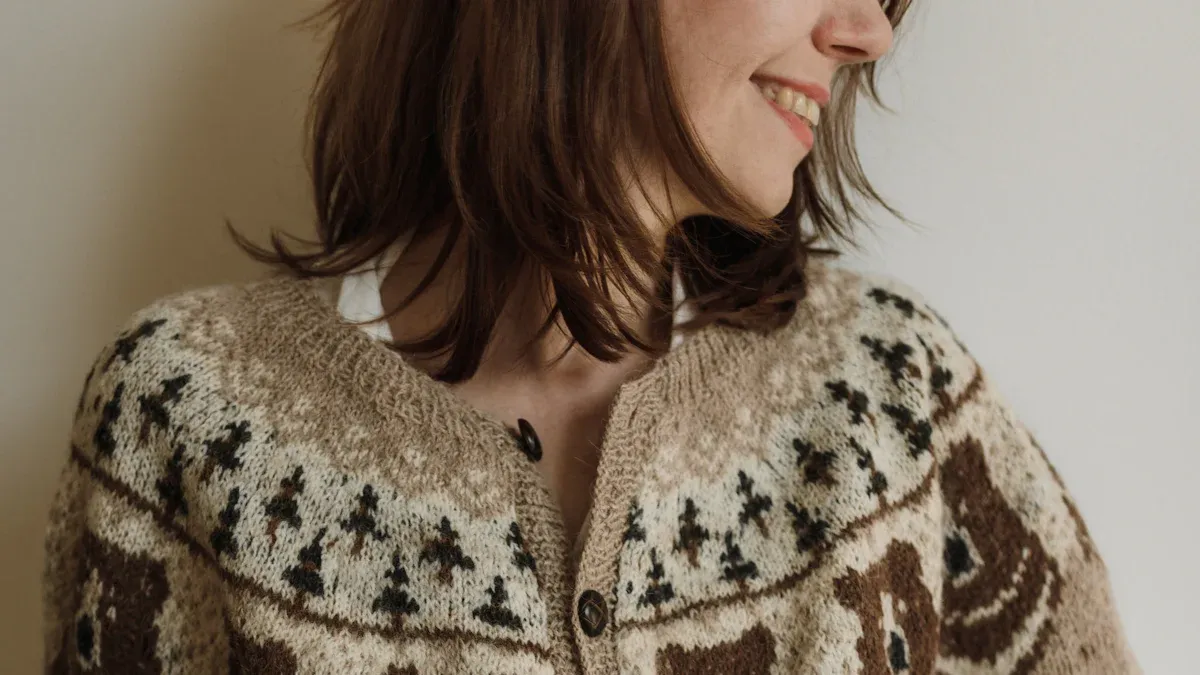
Garment terms refer to the clothes made from knitted fabric. You often see words like sweater, cardigan, pullover, vest, and turtleneck. These are all examples of knitwear you might find in your closet. In fashion dictionaries, knitwear includes any clothing made by looping yarn together. Sweaters and cardigans are popular choices, but knitted dresses and vests also belong in this group. You can use these terms when you talk about what someone is wearing or when you shop for clothes.
Here are some common garment terms you might use:
Sweater
Cardigan
Pullover
Vest
Turtleneck
Hoodie
Each word describes a different style or shape, but all are types of knitwear. You will learn more about each one in the next sections.
Fabric and process terms
Fabric and process terms describe how knitwear is made or the materials used. These words help you understand the structure and features of the fabric. For example, “knit” means the way yarn loops together to form a flexible fabric. You might hear about “jersey fabric,” “rib knit,” or “interlock knit” when you read about clothing materials.
Here is a table showing some important fabric and process terms and their meanings:
Term | Definition |
|---|---|
Band | A strip of fabric finishing the edge of a garment, like at the neck or sleeves. |
Binding | A strip that wraps around the edge for a neat finish. |
Course | A horizontal row of knit or purl stitches. |
Double knit | Two layers of jersey fabric joined together for extra thickness. |
Facing | A lining that adds stability to the edge of a garment. |
Fully fashioned knitwear | Pieces shaped during knitting, then sewn together. |
Intarsia | A fabric with colored patterns, no loose threads on the back. |
Interlock knit | A heavy knit fabric that looks the same on both sides. |
Jersey fabric | One side shows knit stitches, the other side shows purl stitches. |
Knit | The process of looping yarn to make fabric. |
Openwork | Fabric with holes or openings for decoration. |
Rib fabrics | Fabrics with raised lines, good for cuffs and collars. |
Seamless knitting | Making garments with few seams using special machines. |
Warp knit fabrics | Made with yarn moving up and down, like tricot. |
Weft knit fabrics | Made with yarn moving side to side. |
You will see these terms when you read clothing labels or learn about how clothes are made. Some words, like “rib knit” or “cable knit,” also describe patterns you see on sweaters and cardigans. Here is a table showing a few popular knit patterns:
Type of Knitwear | Description |
|---|---|
Cable Knit | Twisted rope-like pattern, often found on sweaters and cardigans. |
Rib Knit | Raised lines, stretchy, used for cuffs and collars. |
Diamond Stitch | Raised diamond shapes with gaps, similar to cable knit. |
Trellis Stitch | Light and warm, with built-up knits and gaps, used in baby clothes. |
Knowing these synonyms for knitwear helps you talk about clothes more clearly. You will find it easier to describe what you see or want to buy. In the next sections, you will learn about each term in detail.
Sweater and related garments
Sweater
You see sweaters at school and family events. A sweater is a knitted piece of clothing that keeps you warm. People usually wear sweaters over shirts or T-shirts. Sweaters come in many colors, styles, and patterns. Some have round necks, V-necks, or turtlenecks.
Fashion experts say sweaters are special because of how they are made. Look at this table to see how sweaters and sweatshirts are different:
Feature | Sweater | Sweatshirt |
|---|---|---|
Construction | Knitted with different methods | Made by sewing fabric pieces together |
Materials | Uses wool, cotton, or cashmere | Made from thick, soft fabric, often cotton or polyester |
Design Complexity | Has detailed patterns and designs | Has a loose and relaxed fit |
The word “sweater” has an interesting story. At first, it meant someone who sweats while working hard. Later, it was used for clothes worn to make you sweat during exercise. Now, sweaters are for warmth or casual wear. The Oxford English Dictionary says a sweater is a woolen vest or jersey for sports, but now people wear them for comfort and style. In the UK and Ireland, sweaters are called “jumpers.”
Tip: When you talk about sweaters, remember they are knitted and keep you warm. You can use “sweater” as a synonym for knitwear when you talk about cozy tops.
Cardigan
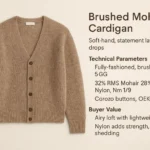
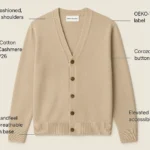
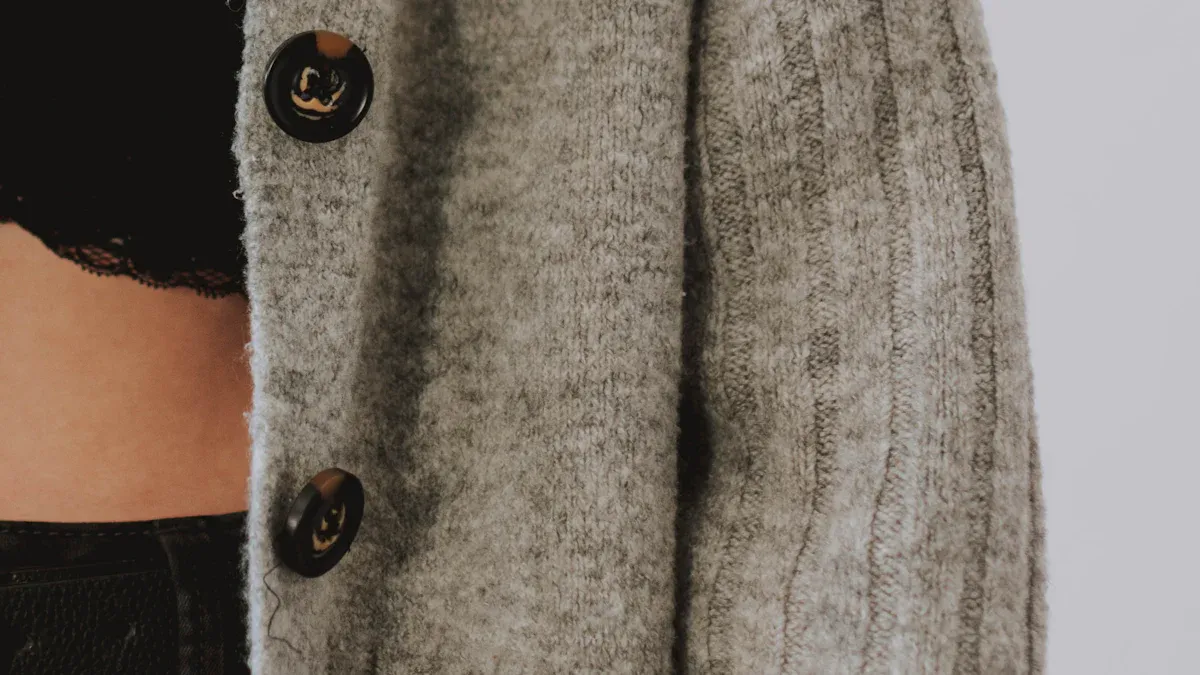
A cardigan is another well-known knitwear item. You know a cardigan because it opens in the front. You can button, tie, or leave it open, so you have many ways to wear it. Cardigans come in short or long lengths.
Here are some things that make cardigans special:
Open front makes layering easy.
Can have buttons, ties, or no fasteners.
Light and flexible for any season.
Comes in short or long styles.
Cardigans are good for layering. You can wear one over a shirt or dress. Unlike sweaters, you do not pull cardigans over your head. Cardigans open in the front, so they are easy to put on or take off. You can wear cardigans for both casual and dressy looks.
Pullover
A pullover is a sweater you pull over your head. Pullovers do not have buttons or zippers. They come in crew neck and V-neck styles. Pullovers are usually more fitted than cardigans.
Check this table to see how pullovers and cardigans are not the same:
Type | Characteristics | Differences |
|---|---|---|
Pullover | A light sweater pulled over other clothes, comes in crew neck and V-neck. | Pullovers do not open in the front and are usually more fitted than cardigans. |
Cardigan | A sweater that opens in the front, often with buttons or zippers. | Cardigans are better for layering and can be thicker than pullovers. |
You wear pullovers when you want a simple, warm layer. They are good for school, sports, or relaxing at home. Pullovers are easy to match with other clothes and come in many colors and patterns.
Note: When you pick between a pullover and a cardigan, think about how you want to wear your knitwear. Pullovers give a classic look. Cardigans give you more ways to layer your clothes.
Now you know the main differences between sweaters, cardigans, and pullovers. These words help you talk about knitwear easily. You can use them as synonyms for knitwear when you talk about what you wear or when you shop for new clothes.
Vest
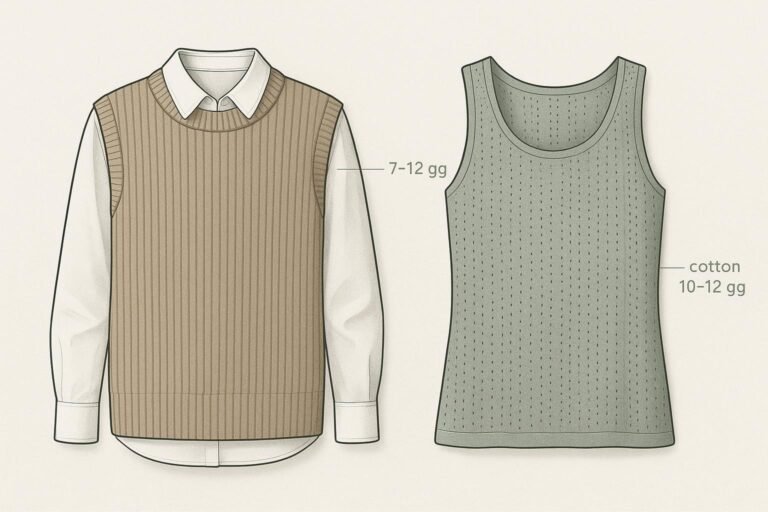
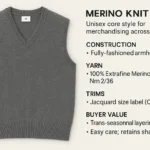
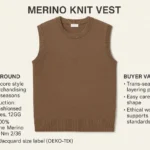
You see vests in many outfits, especially when you want to add warmth without wearing sleeves. A vest is a sleeveless garment made from knitted fabric. People often wear vests over shirts or under jackets. Sweater vests are popular in schools, offices, and casual settings.
You find vests in different materials and styles. The table below shows common types and when you might wear them:
Material/Style | Description | Common Contexts |
|---|---|---|
Wool Sweater Vests | Thick and warm, ideal for fall and winter; includes lambswool, shetland, cashmere, alpaca, and mohair. | Fall and winter wear |
Cotton Sweater Vests | Breathable fabric, suitable for spring and fall; can appear sportier. | Spring and fall wear |
Tennis Vests | Typically made from wool or cotton; features deep v-neck and embellishments. | Preppy, casual settings |
Fair Isle Sweater Vests | Made from wool, known for intricate patterns; originates from Scotland. | Casual and traditional settings |
Layering Potential | Sweater vests are great for layering under jackets or sport coats. | Versatile for various occasions |
Styling Versatility | Can be dressed up or down, suitable for both traditional and contemporary styles. | Various social settings |
You can style a vest in many ways. You might wear a wool vest for extra warmth in winter. You could choose a cotton vest for a lighter feel in spring. Tennis vests give a sporty look, while Fair Isle vests show off colorful patterns. Vests work well for layering. You can wear them under a jacket or over a shirt. You can dress them up for formal events or keep them casual for everyday wear.
Tip: Try a sweater vest when you want to look neat and stay comfortable. You can mix and match with shirts, ties, or jackets for different styles.
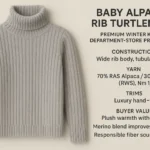
Turtleneck
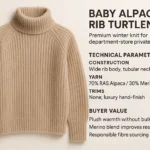
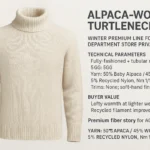
A turtleneck stands out among knitwear because of its high neck. You notice the neck covers most of your throat, which keeps you warm in cold weather. You can fold the neck down or leave it scrunched up. This design makes the turtleneck different from other sweaters and tops.
You find turtlenecks useful and stylish. Here are some reasons why people like them:
The high neck design provides warmth, making it perfect for chilly days.
You can wear a turtleneck as a basic layer or as a statement piece.
Turtlenecks fit many styles, from casual to dressy, so you can use them in different outfits.
You see turtlenecks in many colors and fabrics. Some are thin and light, good for layering. Others are thick and cozy, great for winter. You can wear a turtleneck under a blazer for a smart look or pair it with jeans for a relaxed style.
Note: The turtleneck’s high neck gives you extra warmth and a classic look. You can style it in many ways, making it a timeless choice for your closet.
Hoodie
You recognize a hoodie by its attached hood. Hoodies often have drawstrings so you can adjust the hood for comfort. Most hoodies include a large front pocket, called a kangaroo pocket, where you can keep your hands warm or store small items.
Hoodies use soft materials like cotton or polyester. You find them comfortable for casual wear and sports. People wear hoodies at school, during exercise, or when relaxing at home. Hoodies come in many colors and designs, so you can show your personality.
Hoodies feature an attached hood, often with adjustable drawstrings.
Most have a kangaroo pocket for convenience and style.
Made from comfortable materials like cotton or polyester, hoodies suit casual and athletic activities.
You can choose from many colors and patterns to match your style.
You see hoodies everywhere because they are practical and easy to wear. You can layer a hoodie under a jacket or wear it alone. Hoodies work for many occasions, from running errands to hanging out with friends.
Tip: Pick a hoodie when you want comfort and style. You can wear it for sports, school, or just relaxing.
Fabric and process synonyms
Tricot
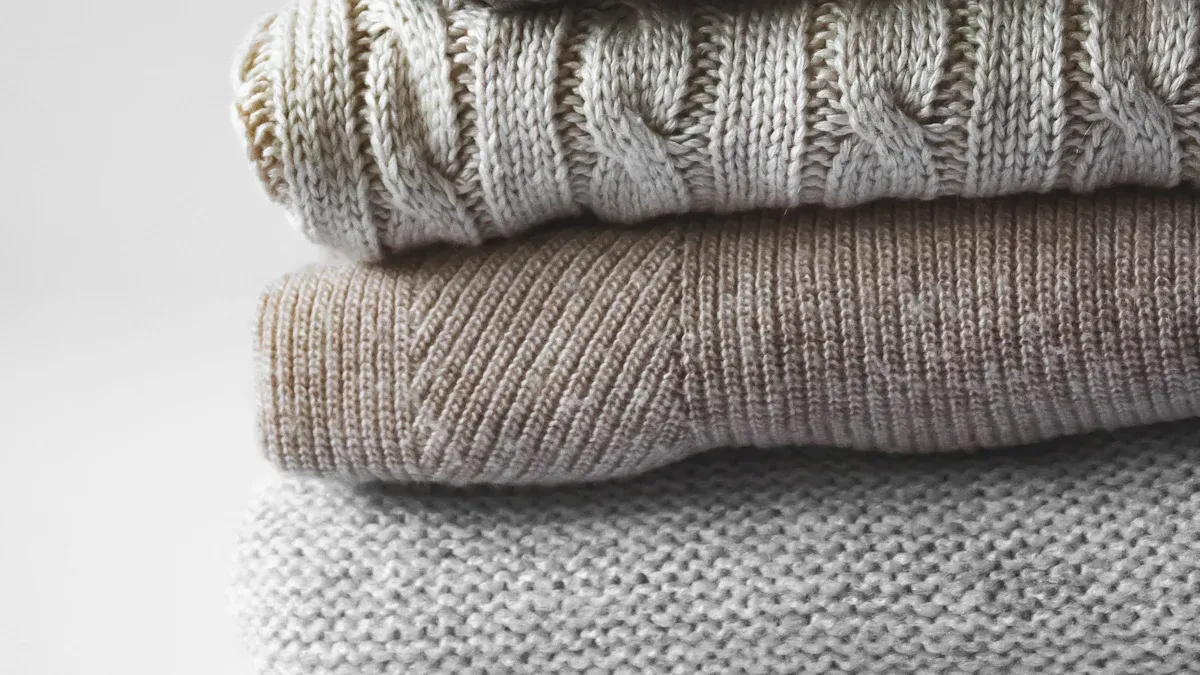
You see tricot as a key fabric synonym for knitwear. Tricot is a special knitted fabric made with a warp knitting process. The yarn moves up and down, making a zigzag pattern. Tricot often uses synthetic fibers like nylon or polyester. These fibers make the fabric stretchy and strong.
Tricot feels soft and smooth. It looks sleek and sometimes shiny. You find tricot in sheer and solid styles. This means it works for many things. Tricot stretches two ways, so it fits well and feels comfy.
Here are some common uses for tricot:
Lingerie
Underwear
Sportswear
Swimwear
Activewear
A tricot machine makes plain fabrics. It often adds elastane or Lycra for more stretch. This helps you move easily in tricot clothes. Tricot is used in swimwear and sportswear because it dries fast and keeps its shape.
Tip: If you want a soft and stretchy fabric, tricot is great for activewear and underwear.
Knit
Knit is a basic synonym for knitwear. You use “knit” for both the fabric and the process. Knit fabrics are made by looping yarn with needles. This makes a flexible and comfy material.
There are two main types of knit fabrics:
Weft knit: Loops go side to side. You see this in T-shirts and socks.
Warp knit: Loops go up and down. Tricot is an example.
Knit fabrics stretch easily and feel soft. You wear knit clothes for comfort and flexibility. The spaces between yarn loops let air move through. This makes knit fabrics breathe well.
Here is a table showing different types of knit fabrics and their uses:
Fabric Type | Description | Common Uses |
|---|---|---|
Jersey Knit | Lightweight, used for T-shirts and skirts. | T-shirts, skirts |
Elastane Knit | Stretchy, great for pajamas and activewear. | Pajamas, activewear |
Rib Knit | Vertical ridges, used for neckbands and turtlenecks. | T-shirts, cardigans, sweaters |
Double Knit | Thicker, looks the same on both sides. | Sweaters, heavier garments |
Interlock Knit | Reversible, thicker, ideal for decorative work. | Casual wear, decorative items |
Lace Knit | Soft and durable, often used in dresses. | Dresses, delicate garments |
Mesh Knit | Lightweight and elastic, popular in swimwear. | Swimwear, activewear |
Purl Knit | Thick with two-way stretch, used in sweaters. | Sweaters |
Tricot Knit | Fine and lightweight, commonly used for swimwear. | Swimwear |
Handmade Knit | Crafted items like sweaters and gloves. | Sweaters, caps, gloves |
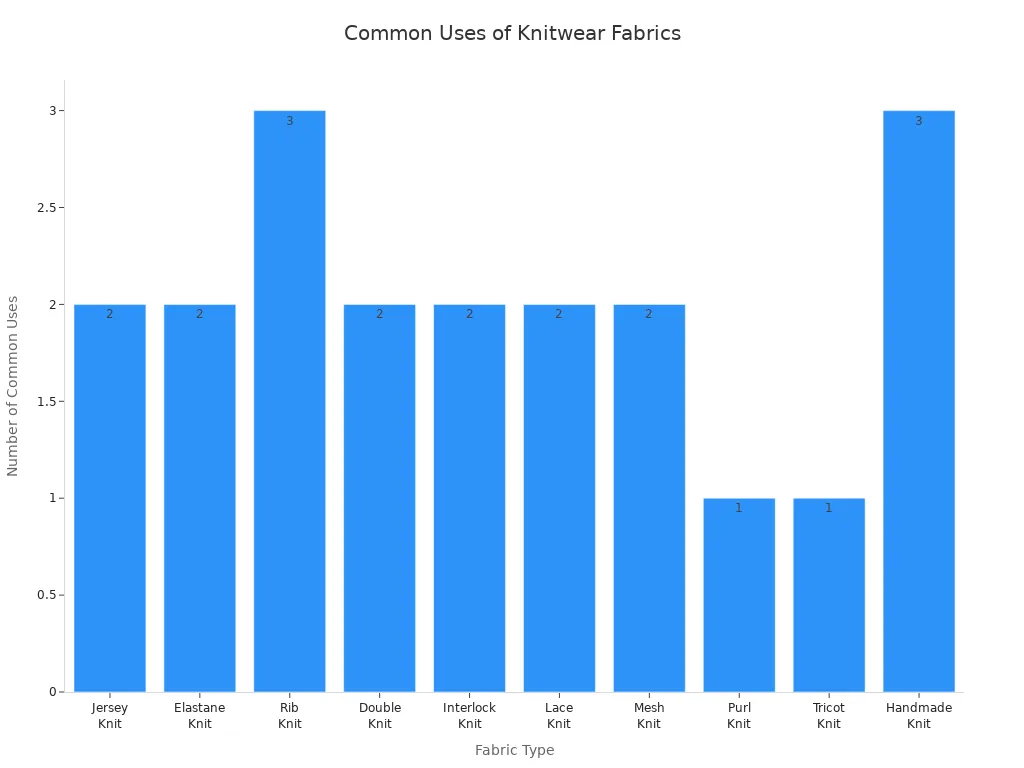
You see knit fabrics in many clothes, from T-shirts to dresses. The way yarn loops together makes each fabric special.
Note: When you shop for clothes, pick knit fabrics if you want something soft, stretchy, and easy to wear.
Knitting
Knitting is the process that makes knit fabrics. You use needles to loop yarn and form rows of stitches. Knitting can be done by hand or by machine. This process lets you make many patterns and textures.
There are two main knitting techniques:
Weft knitting: Loops go sideways. This makes flexible and stretchy fabrics. You see weft knitting in T-shirts, socks, and sweaters.
Warp knitting: Loops go up and down. This makes stable and strong fabrics. You find warp knitting in sportswear and swimwear.
Here is a table showing how each technique affects the fabric:
Knitting Technique | Characteristics | Properties Impacted |
|---|---|---|
Weft Knitting | Loops formed horizontally | Flexibility, Comfort, Elasticity, Drape, Breathability |
Warp Knitting | Loops formed vertically | Stability, Durability, Production Efficiency |
Knitting gives you fabrics that stretch and let air through. You get comfort and style from knitted clothes. The technique you use changes how the fabric feels and looks.
Elasticity: Knit fabrics stretch well, so you move easily.
Drape: The fabric hangs smoothly and looks nice.
Breathability: Air passes through, keeping you cool.
Durability: Warp knits last longer and resist damage.
Tip: If you want to make your own clothes, learning knitting helps you create special patterns and textures.
Now you know how tricot, knit, and knitting work as synonyms for knitwear. Each word describes a part of the process or the fabric. You see these words on clothing labels and in fashion magazines. Knowing the differences helps you pick the right clothes for comfort, style, and activity.
Knitted fabric
You see knitted fabric in many clothes you wear every day. This type of fabric uses loops of yarn to create a soft and stretchy material. You notice that knitted fabric feels different from woven fabric. It stretches easily and fits your body well.
Knitted fabric comes in two main types. You find weft knits, which use horizontal loops, and warp knits, which use vertical loops. Each type has its own look and feel. Weft knits appear in T-shirts and sweaters. Warp knits show up in sportswear and swimwear.
You can check the table below to learn about the main characteristics and classifications of knitted fabric:
Characteristic/Classification | Description |
|---|---|
Stretchability | Knitted fabrics are known for their ability to stretch, which is not found in woven goods. |
Comfort | The structure of knitted fabrics provides a comfortable fit. |
Versatility | They can be used in various applications, from fashion to technical textiles. |
Weft Knits | One of the two main categories of knitted fabrics, formed by horizontal loops. |
Warp Knits | The second main category, formed by vertical loops. |
Wales and Courses | Wales are vertical columns of stitches, while courses are horizontal rows. |
Gauge | Indicates the number of wales per inch, affecting the fineness of the knit. |
Elasticity | Varies based on loop formation, stitch size, and yarn weight. |
You see knitted fabric used in many ways. Designers use it for fashion, sports, and even technical products. You can spot knitted fabric by looking for stretch and soft texture. You also notice patterns like ribbing or cables, which add style and function.
Tip: When you shop for clothes, check if the label says “knitted fabric.” You get more comfort and flexibility with these items.
Knitted fabric stands out because it adapts to your movements. You feel comfortable whether you play sports or relax at home. You also find that knitted fabric keeps its shape and lasts a long time.
Knitwork
You hear the word “knitwork” when people talk about making fabric with loops. Knitwork means creating fabric by interlacing or intermeshing threads or loops. You use needles or machines to make these loops. Knitwork gives you textiles that stretch and move with you.
You can see how knitwork differs from other textile methods:
Knitwork uses loops to build fabric, giving you flexibility and stretch.
Weaving uses two sets of yarn woven together, which makes fabric less stretchy.
Knitted textiles feel soft and bend easily because of their looped structure.
You find knitwork in many items, such as sweaters, hats, scarves, and socks. You also see it in technical textiles, like medical bandages or sports gear. Knitwork lets you create patterns and textures that stand out.
Note: If you want clothes that move with you and feel comfortable, look for items made with knitwork. You get more freedom and style with these fabrics.
Knitwork helps you understand how your favorite clothes are made. You see the difference in how they fit and feel. You also learn why knitwear is popular for both fashion and function.
Hosiery as knitwear
Meaning
You see hosiery every day, even if you do not notice it. Hosiery means coverings for your feet and legs, such as socks, stockings, tights, and pantyhose. People wear hosiery for comfort, warmth, and style. You find hosiery in many places, from sports fields to offices.
Hosiery belongs to knitwear because most types use knitting as the main method of construction. Knitting creates stretchy and soft fabrics that fit your legs and feet well. You often see hosiery made from synthetic fibers like nylon. These fibers make the fabric smooth and strong. Designers use hosiery to combine fashion and function. You get styles that look good and feel comfortable.
Here is a table that shows the main features of hosiery as knitwear:
Feature | Description |
|---|---|
Definition | Knit or woven coverings for the feet and legs, including stockings and socks. |
Method of Construction | Knitting, which is a key aspect of hosiery. |
Materials Used | Often made from synthetic fibers like nylon. |
Design | Combines functionality and fashion, catering to various styles. |
Note: Hosiery stands out because it stretches and fits your body. You can choose from many designs, colors, and thicknesses.
Common types
You find many types of hosiery in stores. Each type serves a different purpose. Some keep you warm, while others add style to your outfit. You can pick the right kind for sports, school, or special occasions.
Here are the most common types of hosiery:
Socks: You wear socks to protect your feet and keep them warm. Socks come in many lengths, such as ankle, crew, and knee-high. You find socks for sports, school, and everyday use.
Stockings: Stockings cover your legs up to the thigh or knee. People wear stockings for fashion or formal events. You see them in sheer or opaque styles.
Tights: Tights cover your legs from the waist down. You wear tights for warmth or style. Tights come in many colors and patterns.
Pantyhose: Pantyhose look like tights but are usually thinner and more sheer. You wear pantyhose with dresses or skirts for a smooth look.
Leggings: Leggings are thicker than tights. You wear leggings for exercise or casual outfits. Leggings stretch and move with you.
You can use hosiery to express your personality. Choose bright colors or fun patterns for a bold look. Pick neutral shades for a classic style. Hosiery also helps you stay comfortable during sports or cold weather.
Tip: When you shop for hosiery, check the label for the material and thickness. Nylon gives you a smooth feel, while cotton adds softness. Try different types to see what works best for you.
You see hosiery as an important part of knitwear. It gives you options for comfort, style, and function. You can mix and match different types to suit your needs every day.
Comparison of synonyms for knitwear
When you look at all the synonyms for knitwear, you see that each word has a special meaning. Some words describe the clothes you wear, while others talk about the fabric or the way it is made. You can use a table to see these meanings side by side. This helps you choose the right word when you talk about fashion or textiles.
Table of meanings
Here is a table that shows what each synonym means. You can use this table to understand which word fits your needs.
Term | What it Means | Example Use |
|---|---|---|
Sweater | A warm, knitted top you wear over shirts | “You wear a sweater in winter.” |
Cardigan | A knitted top that opens in the front | “You put on a cardigan at school.” |
Pullover | A sweater you pull over your head | “You choose a pullover for sports.” |
Vest | A sleeveless knitted garment | “You layer a vest over a shirt.” |
Turtleneck | A sweater with a high, folded neck | “You wear a turtleneck for extra warmth.” |
Hoodie | A casual top with a hood, often knitted | “You grab a hoodie for comfort.” |
Tricot | A smooth, stretchy knitted fabric | “You find tricot in swimwear.” |
Knit | The process or fabric made by looping yarn | “You buy knit fabric for T-shirts.” |
Knitting | The act of making fabric by looping yarn | “You learn knitting to make scarves.” |
Knitted fabric | Any fabric made by knitting | “You see knitted fabric in sweaters.” |
Knitwork | The finished product made by knitting | “You admire knitwork in handmade hats.” |
Hosiery | Knitted coverings for feet and legs | “You wear hosiery like socks and tights.” |
Tip: Use this table when you want to check which word matches the clothing or fabric you are talking about.
Key differences
You notice that these words do not mean the same thing. Each one fits a different situation. Here are some key differences you should remember:
Garment terms like sweater, cardigan, pullover, vest, turtleneck, and hoodie describe what you wear. You use these words when you talk about outfits or shopping.
Fabric and process terms such as tricot, knit, knitting, knitted fabric, and knitwork explain how the clothes are made or what they are made from. You use these words when you read clothing labels or learn about textiles.
Hosiery stands out because it covers your feet and legs. You see hosiery in socks, tights, and stockings.
You can use a list to help you remember:
Garment terms tell you about style and shape.
Fabric and process terms show you how the item is made.
Hosiery is a special group for leg and foot coverings.
Note: When you talk about knitwear, think about what you want to say. If you mean a type of clothing, use a garment term. If you mean the material or process, use a fabric or process term. This helps you sound clear and confident.
You now understand the main differences among the synonyms for knitwear. You can use the right word in school, at home, or when you shop for clothes.
Usage tips for knitwear terms
Everyday conversation
You talk about clothes every day. You might ask a friend, “Do you like my new sweater?” or say, “I wore a hoodie to school.” Using the right word helps people understand you. When you talk about knitwear, choose the word that matches what you mean. If you wear a sweater with buttons, call it a cardigan. If you pull it over your head, call it a pullover.
Here are some tips for using knitwear words in daily life:
Use “sweater” for any warm, knitted top.
Say “cardigan” when the sweater opens in the front.
Choose “turtleneck” if the sweater has a high neck.
Use “hoodie” for a top with a hood.
Say “vest” for a sleeveless knitted top.
Use “hosiery” when you talk about socks, tights, or stockings.
You can also talk about the fabric. If you feel a shirt and it stretches, you might say, “This is a knit fabric.” When you see sportswear, you can say, “This uses tricot for extra stretch.”
Tip: If you are not sure which word to use, look at how the clothing is made or worn. Ask yourself, “Does it have sleeves? Does it open in the front? Is there a hood?” Your answers will help you pick the right term.
Writing advice
When you write about clothing, you want your words to be clear. Use the correct synonym so your reader knows what you mean. If you write a story and say, “She wore knitwear,” your reader might not know if you mean a sweater, a vest, or something else. Be specific. Write, “She wore a blue cardigan,” or “He put on a thick pullover.”
Here are some writing tips:
Match the word to the item. Use “knitted fabric” or “tricot” when you talk about materials. Use “sweater,” “cardigan,” or “vest” for garments.
Avoid mixing up terms. Do not call a hoodie a sweater if it has a hood. Do not call tights “socks.”
Check your spelling. Words like “knitting” and “knitwork” look similar but mean different things.
Use a table or list if you describe many types of knitwear. This helps your reader see the differences.
Common mistakes include using “sweater” for all knitwear or calling any stretchy fabric “knit.” You can avoid these mistakes by learning the main synonyms for knitwear and practicing with real examples.
Note: Clear writing helps your reader picture the clothing. Choose the best word for each item, and your writing will be easy to understand.
You now know that knitwear synonyms include words for clothes like sweater, cardigan, and hoodie. There are also words for fabric and how it is made, like tricot and knitting. Using the right word helps people understand you. For example, some people think knitwear is just sweaters, but it also means hats and scarves. The word “jumper” can mean different things depending on where you live. Sometimes, people call cardigans sweaters, and this can be confusing. If you want to learn more, you can look at a glossary of knitting terms for easy definitions. Knowing these words helps you shop, talk, and write about clothes without getting mixed up. 😊
FAQ
What is the difference between a sweater and a cardigan?
A sweater covers your upper body and keeps you warm. A cardigan is a type of sweater that opens in the front. You can button or zip a cardigan, but you pull a regular sweater over your head.
Can you call all knitted clothes “knitwear”?
Yes, you can. Knitwear includes any clothing made by looping yarn, such as sweaters, hats, scarves, and socks. You use “knitwear” to talk about both tops and accessories.
Is tricot the same as regular knit fabric?
No, tricot is a special kind of knit fabric. You find tricot in sportswear and lingerie. It feels smooth and stretches in two directions. Regular knit fabric includes many types, like jersey and rib knit.
What does “hosiery” mean in fashion?
Hosiery means knitted coverings for your feet and legs. You see hosiery in socks, tights, stockings, and pantyhose. You wear hosiery for comfort, warmth, or style.
How do you know if a fabric is knitted or woven?
You can stretch knitted fabric easily. It feels soft and flexible. Woven fabric feels firm and does not stretch much. Look for tiny loops in knitted fabric. Woven fabric has a crisscross pattern.
When should you use the word “pullover”?
You use “pullover” for a sweater that you pull over your head. Pullovers do not have buttons or zippers in the front. You wear pullovers for a simple, classic look.
Can you use “knit” as both a noun and a verb?
Yes! You use “knit” as a verb when you talk about making fabric by looping yarn. You use “knit” as a noun when you talk about the fabric itself, like “This shirt is a soft knit.”